
Top Reasons to Buy Certified Pre-Owned Vehicles Instead of New Cars
Buying a car is one of the most important financial decisions many people will ever make. Whether you’re a first-time buyer or upgrading your current vehicle, the choice often comes down to whether to buy a new car or a pre-owned vehicle. While new cars come with that enticing “fresh off the lot” appeal, buying a used car offers practical, long-term benefits that make it a smarter choice for many buyers. From cost savings to lower depreciation and added value, there are countless advantages of buying pre-owned vehicles instead of new ones.
In this guide, we’ll dive deep into the reasons why more and more car buyers are turning to used cars and certified pre-owned vehicles—and how making the switch can save you money, provide peace of mind, and still give you the features you want.
What Are the Financial Advantages of Buying Used Cars?
One of the biggest reasons to buy a used car instead of a new vehicle comes down to affordability. New cars often come with hefty price tags, while used cars—even those just a couple of years old—can cost thousands less.
- According to Kelley Blue Book, the average price of a new car now exceeds $40,000.
- A comparable pre-owned vehicle may cost $15,000–$20,000 less, depending on mileage, trim, and condition.
That difference doesn’t just save you money upfront; it also reduces car payments, interest on your auto loan, and taxes. Simply put, used cars offer more value for your money.
Another financial advantage is reduced depreciation. While a new vehicle can lose up to 20% of its value in the first year alone, used cars have already gone through that initial depreciation drop. This means you’ll get a better return on your investment if you decide to resell later.

How Does Buying a Certified Pre-Owned Vehicle Benefit You?
If you like the idea of reliability but want to save compared to buying new, Certified Pre-Owned (CPO) vehicles are the perfect middle ground. These cars are typically late-model, low-mileage vehicles that go through rigorous inspections before being resold.
Benefits of buying a CPO car:
- Comes with extended warranties similar to new cars.
- Includes perks like roadside assistance and free maintenance.
- Backed by a detailed vehicle history report.
For buyers who want peace of mind without the “new car” price, buying a certified pre-owned vehicle is one of the best choices available.
What Safety Features Can You Expect in Pre-Owned Vehicles?
One common misconception is that used vehicles lack modern safety features. In reality, many pre-owned cars from recent model years include the same advanced technologies found in new cars.
- Advanced driver assistance systems (ADAS) like lane departure warning and blind-spot monitoring.
- Adaptive cruise control for stress-free highway driving.
- Automatic emergency braking is now common in certified pre-owned cars.
- Features like Apple CarPlay and Android Auto infotainment systems.
This means you don’t have to buy a brand-new car to get the latest safety and convenience technology—buying used often gives you the same features at a fraction of the cost.
How Does Depreciation Affect Your Vehicle Purchase?
Depreciation is a critical factor that affects the overall cost of car ownership. New cars can lose up to 20% of their value within the first year alone. By choosing to buy a used car, you can save thousands of dollars that you would have otherwise lost to depreciation.
For instance, if you purchase a car that is two years old, you might save a significant amount compared to buying a new car. This money saved can be redirected towards other expenses, such as insurance or maintenance.
What Should You Know About the Used Car Market?
The used car market is massive, giving car buyers more options than ever before. Whether you want a compact commuter car, a family-friendly SUV, or a luxury sedan, there’s a pre-owned vehicle that fits your budget.
- Thousands of cars are available across dealerships and online platforms.
- Increased competition means better deals for buyers.
- Used car dealerships often offer financing, warranties, and vehicle history reports.
With so many options, the key is to shop smart, compare prices, and look for certified pre-owned cars when possible.
What Are the Benefits of Buying a Used Vehicle with Lower Insurance Costs?
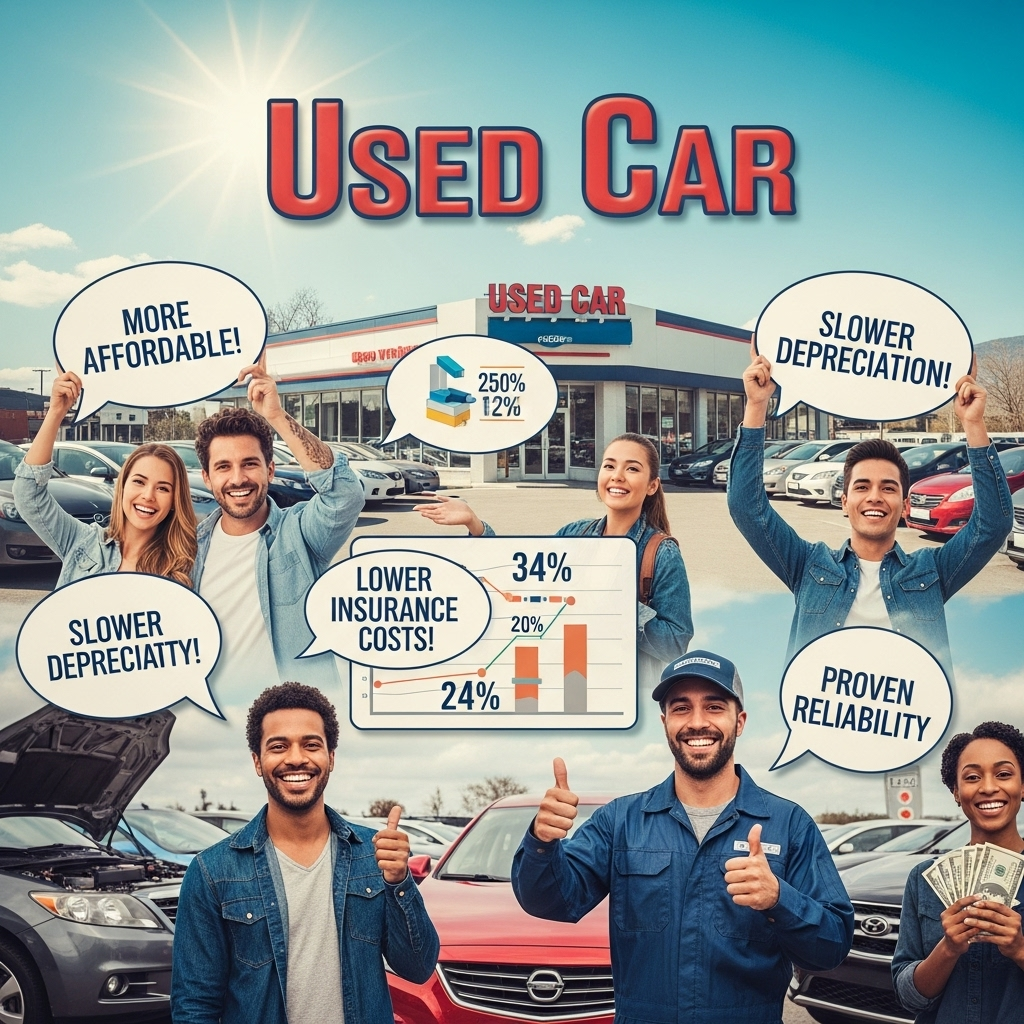
Insurance premiums are based largely on the value of your vehicle. Since used cars cost less than new cars, insurance companies typically charge lower monthly premiums.
For example, insuring a $40,000 new SUV will cost significantly more than insuring a similar $20,000 used SUV. Over the life of the loan, this difference can save you thousands of dollars.
When you combine lower car payments and reduced insurance rates, the total cost of ownership for a used car is much lower than that of a new vehicle.
How Can You Ensure Quality When Buying Used?
Ensuring quality is crucial when shopping for a used car. Always request a vehicle history report to understand the car’s past, including any accidents or major repairs. A thorough inspection by a trusted mechanic is also recommended, especially if you’re considering buying a non-CPO used car.
Many dealerships offer certified pre-owned vehicles that have undergone rigorous inspections, ensuring that you are getting a reliable car. Look for warranties that cover necessary repairs to give you added peace of mind.
Should You Consider Mileage When Buying a Used Car?
Mileage is an important factor when deciding on a used vehicle. Generally, a car with lower mileage is perceived as being in better condition and may have a longer lifespan ahead. However, a higher-mileage car that has been well-maintained can still be a great option.
When shopping for a used car, consider the vehicle’s service history and how well it has been maintained, rather than focusing solely on mileage. A well-cared-for vehicle may outperform a lower-mileage car that has been neglected.
FAQs About Buying Certified Pre-Owned vs. New Cars
1. What is the difference between used and certified pre-owned cars?
A used car is sold as-is, while a certified pre-owned vehicle goes through a manufacturer-backed inspection, includes a warranty, and often comes with perks like roadside assistance.
2. Are certified pre-owned vehicles worth the extra cost?
Yes. While slightly more expensive than non-certified used cars, CPO vehicles provide added peace of mind, warranty coverage, and verified quality—making them a strong value for many buyers.
3. Do certified pre-owned cars have low mileage?
Most CPO programs require vehicles to be late-model and have relatively low mileage, ensuring they’re in excellent condition before resale.
4. Can I finance a certified pre-owned car?
Absolutely. Many dealerships and lenders offer financing options for certified pre-owned vehicles, often with competitive interest rates similar to new car financing.
5. Do pre-owned cars include modern technology features?
Yes. Many CPO and late-model used cars come equipped with advanced safety systems, infotainment features, and driver-assist technology, making them comparable to new models at a lower price.
Is Buying a Used Car a Better Overall Choice?
Ultimately, deciding whether to buy a new or used car depends on your personal circumstances and preferences. However, for many car buyers, purchasing a used vehicle offers substantial advantages, including lower purchase prices, reduced depreciation, and potential savings on insurance.
Given the variety of options available in the used car market, it’s often possible to find a pre-owned vehicle that meets your needs without compromising on quality or safety features.
- Pre-owned vehicles often offer significant savings compared to new cars.
- CPO vehicles provide peace of mind with warranties and thorough inspections.
- Buying used can result in lower insurance costs and reduced depreciation.
- The used car market offers a wide range of options to suit different needs.
- Quality assurance can be ensured through vehicle history reports and inspections.
In conclusion, if you’re considering buying pre-owned vehicles in Moncks Corner, SC, look no further than Preferred Auto Wholesale. They offer a wide selection of affordable pre-owned vehicles, perfect for those ready to make the switch from new. With a commitment to quality and customer satisfaction, you can confidently buy pre-owned vehicles knowing you’re making a wise investment.
Affordable Options for Low-Income Buyers: How to Find Reliable Used Cars
Buying a car when money is tight can be overwhelming. The choices seem endless, and every deal comes with its own risks. You need an affordable vehicle that won’t break down a few months after driving it off the lot. Finding that balance between price and reliability is the real challenge.
You’re not alone if you’re worried about getting stuck with a bad car or falling into a financing trap. Plenty of people have been in the same position, and the good news is that there are ways to make an intelligent, informed purchase. The key is knowing what to look for, which financing options are helpful, and how to avoid scams. This guide breaks down everything you need to know so you can buy with confidence—even on a tight budget.

Which Used Cars Are Worth Buying?
Not every car holds up well over time; some models are known for expensive repairs. When working with a limited budget, you need something that won’t leave you with constant maintenance costs. Certain brands and models have built a strong reputation for longevity and affordability, making them the best options for budget-conscious buyers.
Toyota has long been known for its durable sedans like the Corolla and Camry, which can last hundreds of thousands of miles with proper care. Honda follows closely behind with models like the Civic and Accord, offering strong fuel efficiency and solid resale value. Hyundai vehicles, such as the Elantra and Sonata, have gained popularity for their reliability at a lower price point. Ford’s Fusion and Focus models provide affordable parts and widespread availability, making repairs less expensive. Nissan’s Altima and Sentra offer good fuel economy and are another solid choice for buyers trying to maximize their budget.
The best approach when buying a used car is to focus on models with a long-term reliability history. You may find cheaper options on the market, but if a vehicle is known for frequent breakdowns, it will cost you more in the long run.
How to Finance a Used Car Without Overpaying
If you don’t have enough savings to buy a car outright, financing is an option—but it’s essential to be careful. Some lenders offer loans with sky-high interest rates to exploit buyers with lower credit scores. While monthly payments might seem reasonable initially, these loans often result in buyers paying far more than the car’s actual value.
Before committing to financing, check your options carefully. Local credit unions and small banks often provide better loan terms than larger banks or dealerships. Some Buy Here, Pay Here dealerships offer in-house financing, which can be helpful if you have a limited credit history. However, always read the terms closely to ensure the interest rate is fair. Certain online lenders cater to buyers with lower credit scores, though watching for hidden fees is crucial.
Another option is looking into down payment assistance programs in your area. Some organizations help buyers with initial costs, making car ownership more affordable. Whatever financing route you choose, compare multiple options and look at the total cost of the loan—not just the monthly payment. A lower monthly amount might seem appealing, but you’ll pay more overall if the loan stretches out too long.
Avoiding Costly Mistakes When Buying a Used Car
A low price doesn’t always mean a good deal. Some sellers try to hide issues that could cost you thousands in repairs. Taking the time to inspect a car properly before buying can save you from major headaches.
Before making any decisions, check the vehicle history report. Services like Carfax and AutoCheck can reveal past accidents, title issues, and previous maintenance records. If the seller refuses to provide this information, that’s a red flag.
Next, pay attention to the car’s condition. Look for signs of rust, leaks, or uneven tire wear, which can indicate underlying mechanical problems. The interior should also be in good shape—severe wear and tear may suggest that the previous owner didn’t maintain the car properly.
Taking the car for a test drive is a must. Pay close attention to how the car drives, brakes, and handles turns. Listen for any unusual sounds, like knocking or grinding, which could point to engine or transmission problems. If you’re unsure, have a mechanic inspect the car before deciding. Spending a little upfront for an inspection is much cheaper than dealing with expensive repairs later.
Common Scams and Red Flags to Watch For
Unfortunately, not every seller is honest. Some try to cover up mechanical issues, roll back the odometer, or sell cars with hidden fees that drive up the final price. Knowing the warning signs can protect you from making a bad purchase.
A price that seems unbelievably low should raise a red flag. Sellers rarely offer huge discounts without a reason, so take a closer look before assuming it’s a great deal. A car priced below market value may have hidden damage or undisclosed issues. Be especially cautious if the seller is unwilling to provide a history report or claims that the car is in perfect condition without offering any proof.
Some sellers use high-pressure tactics to rush buyers into making a decision. They might claim multiple other interested buyers or that the deal is only available briefly. A trustworthy seller will let you take the time to inspect the car and make an informed choice.
Hidden fees can also be a problem, especially when buying from dealerships. Review every fee and charge with the seller before agreeing to the purchase. Some dealerships add unnecessary charges that inflate the price beyond what was advertised.
Why Buying from a Dealership Can Be a Safer Choice
While private sellers might offer lower prices, they come with more risks. A reputable dealership provides more security; many offer certified pre-owned vehicles that have been thoroughly inspected and have a warranty.
Financing options are often better at dealerships since they work with multiple lenders to find reasonable rates for buyers with different financial situations. Additionally, dealerships are legally required to follow certain consumer protection laws, making you less likely to encounter scams or undisclosed issues.
Some dealerships also accept trade-ins, allowing you to put the value of your current vehicle toward your next purchase. Choosing a reputable dealership can provide peace of mind if you’re unsure about the car-buying process or don’t want to risk dealing with a private seller.
Final Thoughts: How to Get the Best Deal on a Reliable Car
Finding an affordable, dependable car doesn’t have to be a frustrating experience. The key is to focus on reliable models, carefully research financing options, inspect the vehicle thoroughly, and avoid suspicious deals. Taking your time and making an informed decision will save you money and stress in the long run.
We understand that buying a car on a budget can be challenging at Preferred Auto Wholesale. That’s why we offer high-quality used cars with flexible financing options to make the process easier. Check out our inventory today if you’re looking for a reliable vehicle that won’t break the bank. Let us help you find a car you can depend on!