
How to Maximize Your Trade-In Value and Get the Most Value at a Dealership
Trading in your vehicle can be one of the fastest ways to move from an old vehicle to a new car, but getting top dollar requires strategy. This guide explains how to get the best value, boost your trade-in offer, and navigate the trade-in process at a used-car dealership so you can make an informed decision and secure the best deal.
1. How can I understand my car’s trade-in value before visiting the dealership?
Knowing the car’s trade-in value before you visit the dealership gives you leverage during appraisal. Use appraisal tools like Kelley Blue Book (KBB), Edmunds, and online market value calculators to estimate the resale value and Kelley Blue Book value. Look up the car’s mileage, options, trim, and local market demand to find an accurate market value using reliable tools.
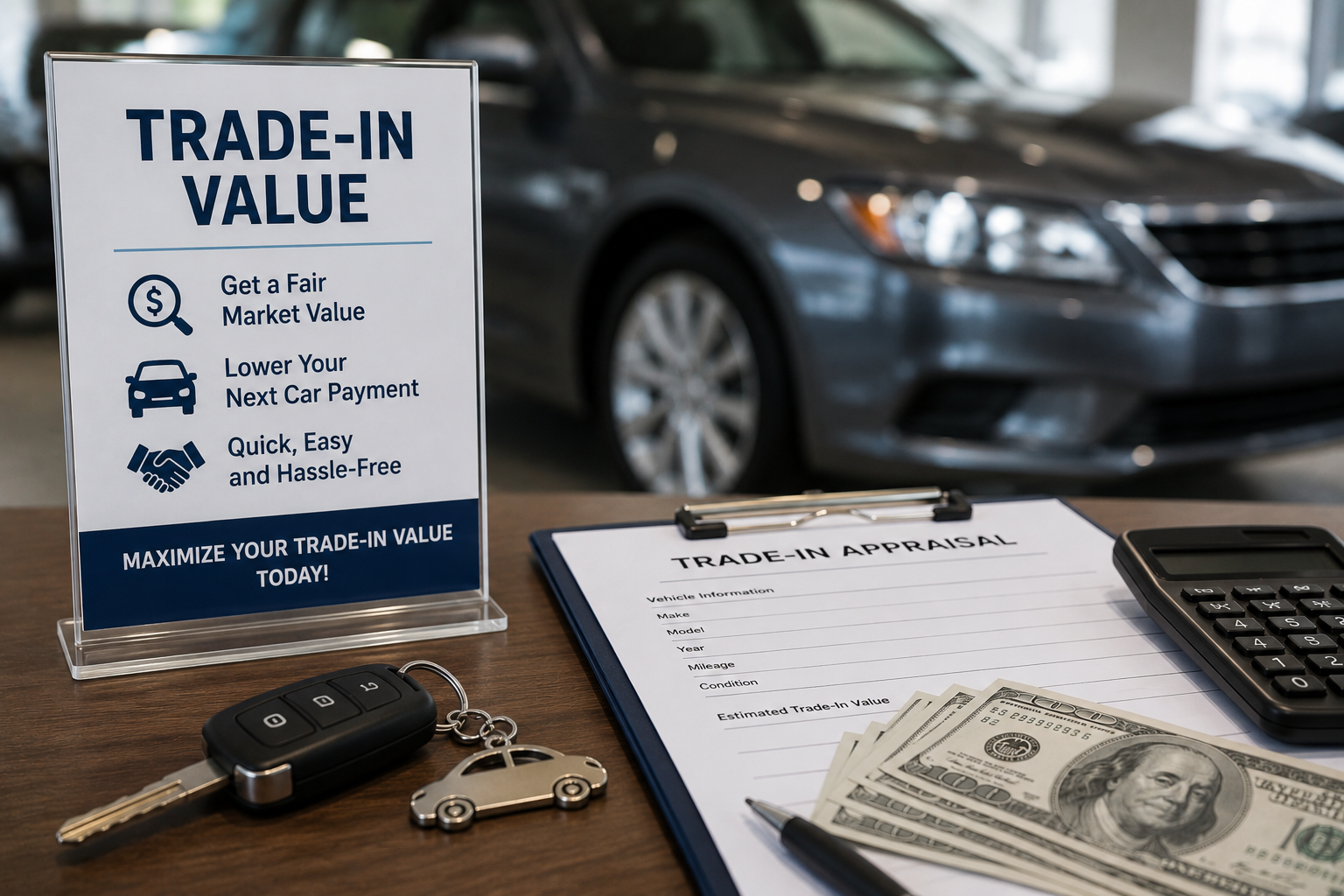
Compare quoted trade-in value estimates from multiple sources to get a realistic range. Gathering quotes from multiple dealerships and using tools like Kelley Blue Book and Edmunds helps you prepare for the trade-in process with confidence and increases your chances of getting the best possible trade-in value.
2. What steps should I take to prepare my car to maximize the trade-in offer?
Preparing your car for appraisal significantly increases the value of your trade-in vehicle. Start with a full cleaning, remove all personal items, and present the car in the best possible condition. Address minor cosmetic damage like dents or upholstery stains; sometimes, small, inexpensive repairs can fetch a much higher trade-in offer at the dealership.
Collect maintenance records and service history to show the vehicle was well-maintained and had routine oil changes and repairs. A well-documented repair and maintenance history reassures dealers and can increase the resale value or appraisal, helping you get the most value for your trade-in car.
3. Should I fix mechanical issues or cosmetic damage before trading in my vehicle?
Deciding whether to repair mechanical issues or cosmetic damage depends on cost versus return. Small cosmetic repairs—touch-up paint, repair a cracked windshield, fix dents, or clean upholstery—often yield a high return on investment by improving the car’s trade-in appeal and fetching a higher trade-in offer.
For significant mechanical issues, get an estimate from a trusted mechanic and compare repair costs to the expected increase in trade-in value. If the repair costs are close to or exceed the difference in trade-in offers, consider disclosing the issue and adjusting your negotiation strategy with the dealer rather than paying out of pocket.
4. How does mileage affect my trade-in vehicle’s appraisal, and how can I maximize value?
A car’s mileage is a major factor influencing trade-in value: lower mileage generally means a higher value. When calculating an appraisal, dealers will consider the car’s mileage against the average use for its age. If your car’s mileage is above average, focus on maintenance records and recent repairs to offset the higher mileage.
If you have lower-than-average miles, highlight this during the appraisal. Emphasize well-maintained service records and the vehicle’s pristine condition to secure a higher trade-in offer. Understanding how mileage impacts used car prices helps you target the best possible trade-in value.
5. How should I get and compare trade-in offers from different dealerships?
Get quotes from multiple dealerships—online and in-person—to compare offers. Ask for appraisals from used car dealers, request written trade-in offers, and use those quotes from multiple dealerships as leverage when negotiating. Comparing offers helps reveal the best value for your vehicle and identifies dealerships showing higher market demand for your model.
Tip: Present competing offers to the dealer to encourage a better trade-in offer or credit toward the purchase of a new vehicle. Make sure each offer is itemized so you can compare how each dealer calculated the trade-in value, including adjustments for cosmetic damage or mileage.
6. What negotiation tactics help me get the best deal when trading in my car?
Separate the trade-in from the purchase negotiation to avoid confusion and to ensure you get the best price on both sides. Begin by negotiating the new car’s price or financing terms, then discuss the trade-in value. Dealers may combine numbers to make a deal seem better; keep each figure clear to maximize the trade-in value you receive.
Use leverage: show appraisal tools like Kelley Blue Book, maintenance records, and competing offers. Be prepared to walk away if the dealer won’t meet a fair trade-in offer. A confident approach that demonstrates knowledge of your car’s worth will often result in a higher trade-in value.
7. When is the best time to trade to get a higher trade-in value?
Timing can affect value. Consider market trends and time to trade relative to new vehicle launches, seasonal demand, and local used car prices. Selling or trading when demand is high for your model—such as before winter for SUVs—can increase the value of your trade-in vehicle due to stronger market demand.
Also, weigh your car’s mileage and condition—delaying too long may push mileage past a threshold where resale value drops. If a new car purchase is imminent and market demand is good, trading sooner can help you get top dollar.
8. How do dealerships appraise trade-ins, and what should I expect during an appraisal?
Dealership appraisals examine mechanical condition, cosmetic damage, mileage, and maintenance history. During inspection, they’ll look at the engine bay, tires, upholstery, and exterior for dents or windshield damage. They’ll also consider local market demand and the car’s resale value to determine a trade-in offer.
Expect the dealer to use tools and appraisal data, including KBB and Edmunds, to justify offers. Present your documentation, highlight minor repairs done, and point out well-maintained aspects to influence the appraisal toward a higher trade-in value.
9. Is trading in my car better than selling privately to get the best price?
Selling privately often yields a higher price than a trade-in because private buyers typically pay closer to market retail. However, trading in offers convenience, immediate credit toward a new car, and fewer hassles with listings and showings. If maximizing value is the only priority, selling privately may fetch top dollar, but not everyone has the time or appetite for that process.
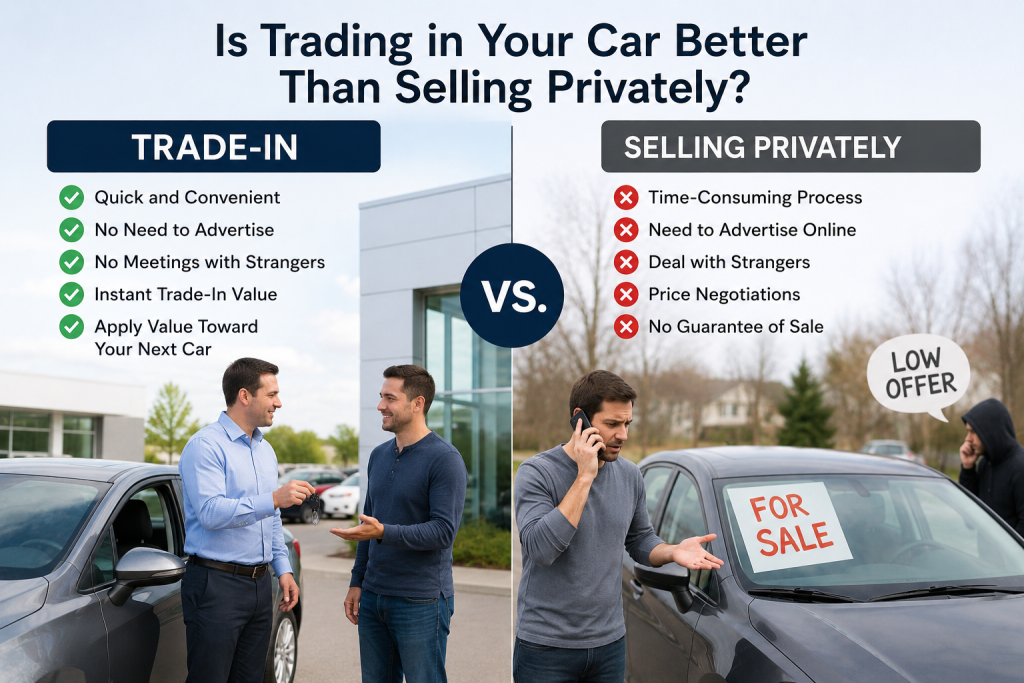
If you decide to trade-in, use the advantage of convenience to negotiate the best deal by preparing your car, collecting quotes, and comparing offers from multiple dealerships. Sometimes dealers will offer near-private-sale money if they see strong market demand for your model.
10. What paperwork and final steps should I complete to finalize the trade-in process?
Bring the title (if owned outright), registration, maintenance records, and any loan payoff information to the dealership. Make sure you understand how the dealer will apply credit toward the purchase of your new car, whether it reduces monthly payments, and how trade-in value affects taxes in your state.
Before signing, review the final contract to confirm the agreed trade-in offer and that the dealer has documented the condition of the vehicle accurately. Confirm the payoff amount if you have an outstanding loan and ensure the dealer provides documented credit toward the purchase or a clear payment for your trade-in car.
11. How can I boost my vehicle’s resale and trade-in value through affordable improvements?
Small investments can lead to a higher trade-in offer: perform a fresh oil change, replace worn tires if necessary, fix small dents, and deep clean the interior. Replacing broken trim or addressing cosmetic damage like upholstery stains and cracked windshields sometimes yields a strong return relative to cost.
Present clean maintenance records and recent receipts for repairs to demonstrate the car’s best possible condition. These steps make your vehicle more competitive among trade-ins and can help you get the most value when trading in your car at a dealership.
12. What should I consider if I have negative equity or a loan on my trade-in vehicle?
If you still owe money on your car, the dealer will calculate the payoff and may roll negative equity into the new vehicle loan. Understand how this affects monthly payments and the overall best price you pay. Ask for an itemized payoff quote and negotiate the trade-in offer independently to minimize the impact of negative equity on your deal.
Consider paying down the loan before trading in, or compare offers from multiple dealerships to find the best deal that covers payoff and gives you fair credit toward your next purchase. Exploring options like selling privately can sometimes be worth it if negative equity is significant.
13. How do I ensure the trade-in process helps me pay less and get top dollar?
To pay less and still get top dollar, be organized: research KBB and edmunds values, collect maintenance records, gather multiple offers, and negotiate the new vehicle price separately. Use the best quotes to help you negotiate a higher trade-in offer and reduce the final purchase price of your new car.
Ask the dealer to itemize trade-in credit and financing terms so you can see how the trade-in value impacts monthly payments. A transparent process helps you lock in the best possible deal and ensures you don’t overpay when purchasing a new vehicle with trade-ins included.
Conclusion
How to Get the Most for Your Trade-In at a Used Car Dealership boils down to preparation, research, and negotiation. Use tools like Kelley Blue Book and Edmunds, fix minor issues, compare offers from multiple dealerships, and present maintenance records to maximize your trade-in value. Whether you trade in your car or sell privately, knowing the market value and being ready for the appraisal will help you get the best value and the best possible trade-in offer.
For buyers in South Carolina looking for trusted used car dealers, consider Preferred Auto Wholesale , a Used Car Dealership in Moncks Corner, SC. They work with customers to appraise trade-ins, offer competitive trade-in quotes, and help you find Used cars for sale while helping you make a deal that gets you the best price and credit toward the purchase of a new vehicle.
Frequently Asked Questions
1. How do I find my car’s trade-in value before going to a dealership?
You can estimate your car’s trade-in value using tools like Kelley Blue Book (KBB), Edmunds, and online appraisal calculators. These tools help you understand your vehicle’s market value based on mileage, condition, trim, and demand before visiting a used car dealership.
2. Can detailing and cleaning my car help improve its trade-in value?
Yes, a clean and well-presented car can positively impact the dealership appraisal. Interior detailing, removing personal items, and fixing minor cosmetic issues help improve first impressions and may lead to a higher trade-in offer.
3. Should I repair my car before trading it in?
Minor repairs like dents, scratches, or worn tires can increase resale value if the cost is low. However, expensive mechanical repairs may not always increase your trade-in value enough to justify the expense, so it’s important to compare costs versus expected return.
4. Why is mileage important in a trade-in appraisal?
Mileage is one of the biggest factors in determining trade-in value. Lower mileage usually results in a higher offer because it indicates less wear and longer remaining lifespan, while high mileage can reduce resale value during dealership evaluation.
5. Is it better to get multiple trade-in offers?
Yes, getting multiple offers from different used car dealerships helps you compare appraisal values and negotiate a better deal. Dealers may adjust their offer if they know you have competing trade-in quotes.