
Seasonal Car Care Tips for Used Vehicles in the Lowcountry Climate
The Lowcountry climate—hot, humid summers, salty coastal air, and milder winters—creates unique challenges for used cars. Whether you’re a recent buyer of a pre-owned vehicle or maintaining a long-term daily driver, seasonal car maintenance and car care tips tailored to this region will help you avoid breakdowns, protect vehicle lifespan, and keep your vehicle running smoothly all year round. This guide focuses on practical, checklist-style advice to inspect, maintain, and prepare used vehicles for every season.
1) How should I adjust my car care checklist for the Lowcountry seasonal car maintenance?
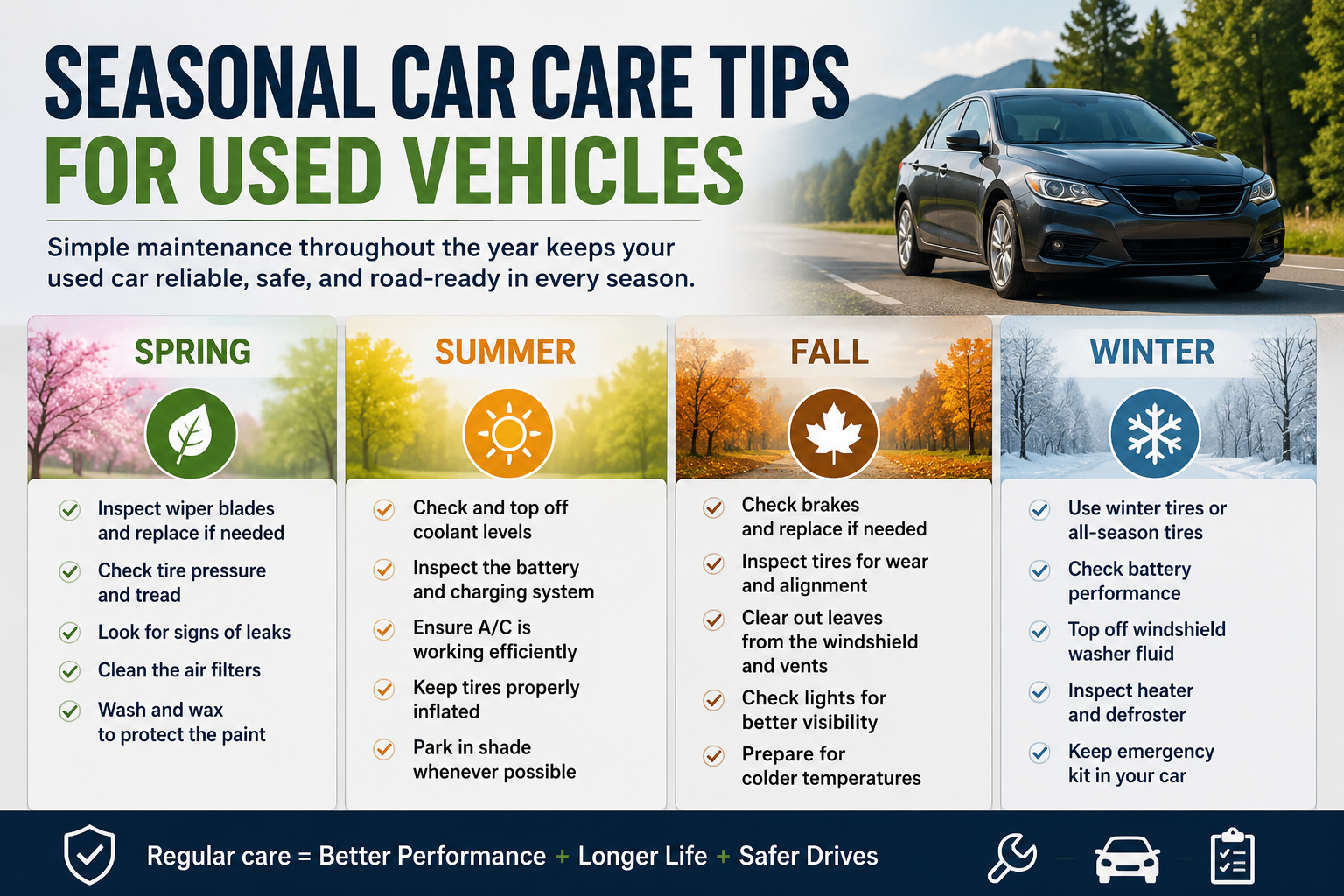
Start with a region-specific maintenance checklist that emphasizes cooling system health, tire pressure, and corrosion prevention. The summer heat and high humidity in the Lowcountry can take a toll on coolant, cause fluid to evaporate faster, and accelerate rust from salt air exposure. Regular vehicle maintenance should include checking coolant levels, brake fluid, and battery condition to keep your car running smoothly.
Create a quarterly inspection schedule: inspect coolant and fluid levels, check tread depth and tire pressure, and test wipers and washer fluid. Seasonal maintenance tips for used cars should always include a visual inspection of undercarriage components for rust, especially if the vehicle is driven near the coast.
2) What car maintenance tips help prevent overheating during summer heat?
High temperatures mean the cooling system must perform at its best. Inspect radiator hoses for cracks, check coolant concentration, and ensure the radiator cap seals properly.Flushing the cooling system and replacing old coolant helps protect the engine from internal corrosion while improving temperature regulation, reducing the risk of overheating during extended drives or heavy traffic in hot weather conditions.
Also, make sure the fan clutch and thermostats are functioning correctly and that the condenser and radiator are free from debris. Keeping the cooling system maintained helps maintain fuel economy and prevents costly breakdowns that are common when a used car hasn’t had seasonal maintenance.
3) How can I protect used cars from salt and humidity affecting their lifespan?
Salt and humidity in coastal Lowcountry air can shorten the lifespan of metal components. Regular car washes—especially the undercarriage—are essential seasonal car care. Washing away salt reduces corrosion on brake lines, exhaust systems, and other underbody parts. Use rust-inhibiting sprays after cleaning if you plan to keep the vehicle long term.
Besides washing, inspect brake components and brake fluid for contamination and rust. Brake maintenance is critical: corroded rotors and lines can compromise braking performance. A proactive approach will keep your vehicle safe and extend its usable life.
4) When should I check tires and tread depth as part of fall car care tips?
Fall is a perfect time to evaluate tires and tread depth before the annual weather shifts. Check the tire pressure regularly, especially as cooler air causes pressure to drop. Inspect the tire tread depth and check for uneven wear patterns, which may indicate potential alignment, suspension, or steering system issues. Proper tire maintenance supports fuel economy and handling, which is especially important for used cars where wear and tear may be uneven.
Use a tread depth gauge or the penny test to ensure safety margins are met. Rotate tires every 5,000–7,500 miles and include wheel alignment in your maintenance checklist to preserve tread life and keep your car running smoothly through seasonal changes.
5) What seasonal maintenance should I perform to ensure windshield and wiper readiness?
Visibility matters year-round. Inspect wiper blades and replace any that streak or chatter, especially before rainy seasons common to the Lowcountry. Refill washer fluid with a formula suited to current temperatures and keep an eye on the windshield for chips that can spread with temperature changes.
Wiper maintenance tips include checking the rubber edge, cleaning the windshield regularly, and ensuring washer the nozzles are unclogged. These small checks prevent safety issues and ensure your vehicle performs well during storms or humid mornings when road spray is common.
6) How do I prepare my pre-owned vehicle for road trips and seasonal travel?
Before any road trips, perform a full vehicle maintenance inspection: check oil and filters, inspect brakes, verify tire pressure and tread, and test the cooling system. For used cars, a pre-trip checklist helps identify wear and tear that could lead to a breakdown. Pack jumper cables, a basic toolkit, and extra washer fluid as part of your road trip essentials.
Addressing small maintenance needs early improves fuel economy and reduces the chance of mid-trip issues. Scheduling a service appointment to inspect belts, hoses, and the battery is a smart step to keep your vehicle running smoothly before long drives.
7) How should I adapt winter car care and cold winter checks for the Lowcountry?
The Lowcountry doesn’t face severe winters, but chilly fall nights and occasional cold snaps require attention to battery health and tire pressure. Cold air lowers tire pressure, so check and adjust it during colder months. Check the battery terminals for signs of corrosion and verify that the battery is fully charged and capable of delivering reliable performance during colder weather starts.
Also, confirm that brake fluid and coolant levels are within manufacturer specs and that the coolant mix protects against the lowest expected temperatures. Winter car maintenance here is about readiness: simple checks prevent avoidable starting issues and keep used cars dependable.
8) What maintenance tips help improve fuel economy in changing seasons?
Maintaining proper tire pressure, regular oil changes, and clean air filters all contribute to better fuel economy. Seasonal changes affect fluid viscosity and tire pressure, so a proactive maintenance plan will help your used car use less fuel. Check the air filter during spring and fall to improve engine efficiency and airflow.
Underinflated tires and clogged filters make the engine work harder and reduce fuel economy. Follow a maintenance schedule that includes checking fluid levels and replacing worn parts to keep your vehicle running smoothly and cost-effectively.
9) How often should I inspect brakes, brake fluid, and related components?
Brake inspections are a high-priority item on any maintenance checklist. Inspect brakes at least every 12 months or sooner if you hear squealing or experience a change in stopping performance. Check brake fluid for clarity and proper level; contaminated or low brake fluid can cause poor brake response and accelerate component wear.
For used cars, have a mechanic measure rotor thickness and pad wear. Replacing brake fluid as part of scheduled maintenance avoids moisture buildup, which can corrode lines and reduce the lifespan of braking components—keeping you safer across seasons.
10) What routine seasonal maintenance will help avoid costly breakdowns in used vehicles?
Routine checks—coolant levels, oil changes, battery tests, tire pressure, wiper condition, and visual inspections—are the backbone of breakdown prevention. Seasonal maintenance tips emphasize inspecting belts and hoses, monitoring fluid leaks, and ensuring the cooling system is flushed and refilled as needed to avoid overheating issues.
Create a maintenance checklist that includes scheduled inspections every season. Address worn parts promptly; preventative replacement is often cheaper than repairing damage after a breakdown. For owners of pre-owned vehicles, a consistent schedule will preserve value and keep the car dependable.
11) How can I tailor fall car care tips specifically to used cars bought from a dealership?
When you buy used cars from a used car dealership, request a full service history and follow a post-purchase inspection plan. Fall car care tips for pre-owned vehicles should include a comprehensive check of the cooling system, a brake inspection, and a tire and alignment review. This ensures your current vehicle is ready for seasonal transitions and road trips.
Dealerships may offer maintenance plans—compare these to a local mechanic’s service. Keeping receipts and service records creates a maintenance log that helps maintain resale value and helps you track when key items like brake fluid or coolant were last changed.
12) What are the essential seasonal car maintenance tools I should keep in my vehicle?
A basic vehicle care kit will save time and stress: jumper cables, a portable tire inflator, a tire pressure gauge, a flashlight, extra washer fluid, and basic tools. For the Lowcountry, add a small bottle of coolant and a collapsible funnel to address minor fluid needs that can lead to overheating if ignored.
Regularly check your kit items and replace any used or expired supplies. A prepared owner is less likely to experience severe consequences from minor failures, and these tools support keeping your car running smoothly between professional service visits.
13) How often should I perform seasonal car maintenance to extend vehicle lifespan?
Follow a seasonal schedule: inspect key systems at the start of each season, with more thorough service every 6–12 months. Regular oil changes, tire rotations, cooling system inspections, and brake checks prevent wear and tear from accumulating and help extend the lifespan of used cars.
Document each maintenance event on your checklist. This consistent vehicle maintenance regimen ensures the car performs reliably, reduces the chance of unexpected failures, and maintains good fuel economy.
14) What signs indicate immediate service is needed to prevent an overheat or breakdown?
Watch for warning signs like temperature gauge spikes, coolant leaks, steam from the engine bay, or unusual smells. Strange noises, loss of power, or poor braking performance require immediate inspection. If you notice any of these signs, pull over safely and have the vehicle inspected to avoid severe damage.
Regular inspections help catch issues early. Don’t ignore dashboard warnings; addressing problems promptly saves money and prevents costly repairs due to overheating or component failure.
15) How can regular seasonal car care tips help me keep my used vehicle running smoothly long-term?
Regular seasonal maintenance reduces wear and tear, improves fuel economy, and extends the vehicle’s lifespan. By following a focused checklist—checking coolant, brake fluid, tire pressure, and wiper blades—you keep your vehicle in peak condition and reduce unexpected breakdowns.
Consistent car care also protects resale value and ensures safety for everyday driving and road trips. A proactive approach is the most reliable path to keep your car running smoothly through the changing Lowcountry climate.
Summary: Key Takeaways
- Keep a seasonal car maintenance checklist emphasizing the cooling system, tires, brakes, and corrosion prevention.
- Inspect coolant, brake fluid, and battery regularly to prevent overheating and starting issues.
- Wash the undercarriage often to protect against salt and humidity damage.
- Monitor tire pressure and tread depth to improve fuel economy and safety.
- Replace wiper blades and maintain washer fluid for clear visibility during storms.
- Prepare a road trip kit including jumper cables, a tire inflator, and basic tools.
- Follow scheduled inspections every season and document maintenance to extend lifespan.
For buyers researching pre-owned vehicles or owners of used cars in the Lowcountry, these seasonal car care tips and maintenance tips will help you keep your vehicle running smoothly and avoid costly breakdowns. If you’re shopping for a reliable used car, consider Preferred Auto Wholesale, a Used Car Dealer in Moncks Corner, SC—an experienced used car dealership that can help you find well-maintained pre-owned vehicles and provide guidance on car maintenance, car care tips, inspections, brake checks, fuel economy, cooling system concerns, and keeping your car running smoothly with a proper checklist and service history.
Top Fuel-Efficient Used Cars for Commuters in SC: Best Used Cars for Sale with Low Mileage and Great MPG
Commuting in South Carolina means balancing highway miles, city traffic, and budget. Choosing fuel-efficient used cars for commuters in South Carolina can dramatically lower your transportation costs, reduce maintenance expenses, and deliver reliability. This guide highlights efficient used vehicles, MPG ratings, mileage considerations, and tips for finding quality used cars for sale in SC.
What Used Car Models Offer the Best Fuel Economy for SC Commuters in 2025?
When shopping for a fuel-efficient used car in SC, prioritize hybrids and compact sedans known for good gas mileage and strong fuel economy ratings. Popular used models like the Toyota Prius, Toyota Corolla, Honda Accord, Hyundai Elantra, and Kia compact sedans frequently appear in the used market for their dependable MPG on both city and highway driving. For 2025, the used market also features competitive listings for 2023 and 2024 model year vehicles at attractive sale prices.
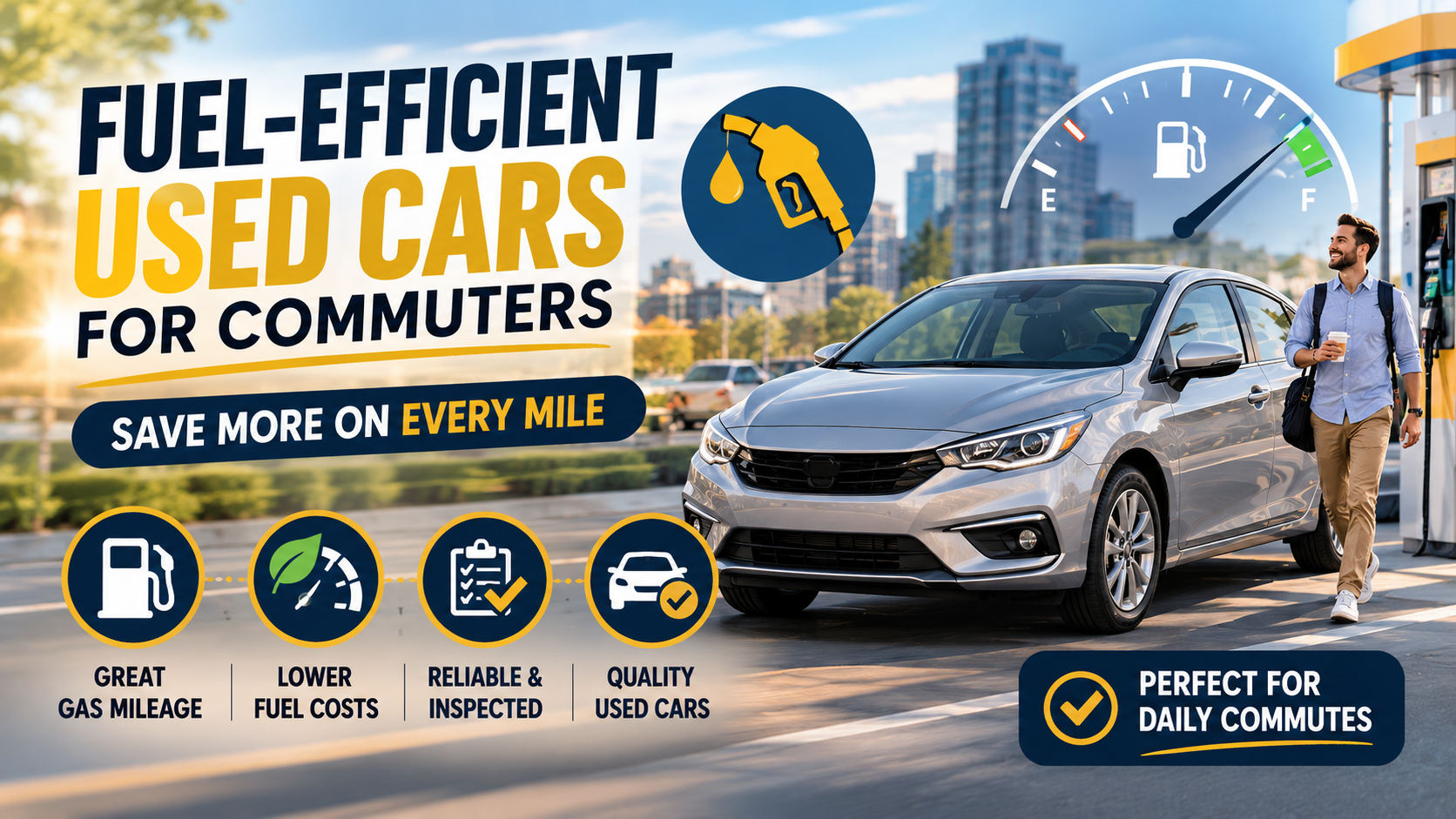
Consider factors beyond EPA ratings: vehicle mileage, maintenance costs, battery health for hybrids, and total ownership costs. A well-maintained 2020 Toyota Corolla or a 2024 Hyundai Elantra with lower mileage can be a standout used purchase — offering reliability, high MPG, and a lower purchase price than a new model. Transparent vehicle history reports and certified pre-owned listings make these efficient used choices feel like quality used investments for daily SC commuters.
Which Toyota Models Are the Best Used Cars for Commuting in South Carolina?
Toyota models consistently top listings for dependable, fuel-efficient commuters. The Toyota Camry and Toyota Corolla are perennial favorites in the used cars for sale market, offering solid reliability, good gas mileage, and comfortable midsize or compact sedan options. A 2020 Toyota Camry or 2019 Toyota Corolla typically delivers excellent highway MPG for longer South Carolina commutes — and both hold strong resale value in the used market.
For even better fuel economy, consider hybrid options such as the 2021 Toyota Prius, 2025 Toyota Camry Hybrid, or other 2025 Toyota hybrid listings appearing in local SC inventory. The Toyota Camry hybrid, in particular, is one of the most fuel-efficient commuters available as a used car, combining midsize comfort with outstanding MPG ratings. Toyotas often come with remaining manufacturer warranties or dealer-backed warranties, reducing risk for commuters seeking dependable transportation at an affordable price.
How Does the Hyundai Elantra Stand Out as an Efficient Used Vehicle for Commuters?
The Hyundai Elantra — including the compact 2023, 2024, and 2025 model years — is a strong contender in the used market for SC commuters seeking quality used sedans with strong fuel economy. The Hyundai Elantra offers modern tech, a competitive MPG rating, and affordable financing options from used car dealers, making it one of the most attractive, efficient used choices for South Carolina drivers in 2025.
Hyundai’s warranty reputation and lower purchase price compared to competitors make the Elantra a budget-friendly used car with dependable daily performance. When reviewing listings, always check mileage, vehicle history, and remaining warranty coverage — these factors directly influence long-term maintenance costs and overall savings for daily commuters driving in SC.
Are There Reliable Ford, Dodge, and Jeep Used Cars That Combine Efficiency and Comfort?
Ford offers several efficient used options that serve commuters well, including compact sedans and small crossovers with competitive MPG for highway and city driving. Used Ford listings in SC often provide attractive sale prices and transparent financing from local dealers, appealing to buyers who want a balance of comfort and fuel efficiency at an affordable purchase price.
Beyond Ford, used Dodge and Jeep vehicles appeal to SC commuters who want versatility. While Dodge and Jeep models tend to prioritize power and capability, certain trims deliver reasonable fuel economy for drivers who need more space. For commuters specifically focused on MPG and mileage savings, compact sedans and crossovers from Ford remain the stronger, more efficient used pick from this group.
Always prioritize inspection and transparent vehicle history checks when buying used Ford, Dodge, or Jeep vehicles — proper maintenance history is essential to ensure dependable performance and avoid unexpected repair costs.
Which Hybrid Vehicles Are Most Practical for South Carolina Commuters?
Hybrid vehicles are among the best fuel-efficient commuters for the city and highway mix that South Carolina drivers face daily. The Toyota Prius, Toyota Camry Hybrid, Honda CR-V Hybrid, and select Hyundai hybrid trims combine battery-assisted propulsion with proven reliability — delivering standout MPG and lower fuel costs compared to conventional sedans.
The 2021 Toyota Prius remains a top-rated, efficient used hybrid on the market, offering exceptional MPG and a lower purchase price than newer model years. Similarly, the Honda CR-V hybrid provides commuters with crossover versatility and strong fuel economy, making it one of the most popular used hybrid SUVs in SC listings for 2025.
When evaluating hybrids, check battery health, warranty status, and service records. Some hybrids may still carry manufacturer or extended warranties covering battery components — a significant advantage for used car buyers. A hybrid’s higher initial purchase price can be offset by years of savings in fuel and lower maintenance costs when properly verified by a trusted dealer.
What Compact Sedans Provide Good Gas Mileage and Low Maintenance Costs?
Compact sedans like the Honda Accord, Toyota Corolla, Hyundai Elantra, Kia compact models, and Mazda3 are renowned for good gas mileage and low maintenance costs. These efficiently used sedans are commonly found in used cars for sale listings across SC and consistently earn strong reliability ratings — making them top choices for daily commuting where fuel economy and affordable upkeep matter most.
To maximize savings, prioritize lower-mileage examples with full vehicle history reports. Financing offers at used car dealerships in SC often make these compact sedans an accessible purchase option for most budgets. Look for standout used listings that include recent inspections, transparent pricing, and optional warranty coverage to protect your investment over time.
How Do SUVs and Crossovers Fare as Fuel-Efficient Commuter Vehicles?
While SUVs typically use more fuel than sedans, many modern compact crossover models deliver competitive MPG — especially in the used market. Options like the Honda CR-V, Subaru Crosstrek, Buick compact crossovers, Nissan Rogue, and certain Lincoln and BMW crossover trims can provide a balance of cargo space, ride comfort, and reasonable fuel economy for commuters who need more versatility than a sedan offers.
For 2025, midsize crossover SUVs with efficient engine options or hybrid variants have become increasingly popular used listings in SC. Consider total ownership costs — including insurance, maintenance costs, and purchase price — when comparing SUVs and sedans. Mercedes-Benz compact SUVs are also appearing in the used market at more accessible price points, offering premium tech alongside reasonable efficiency for SC commuters with a higher budget.
What About Trucks — Are They a Practical Option for SC Commuters?
Trucks like popular used Dodge Ram, Nissan Frontier, or Jeep-adjacent pickups are common in SC, but they generally carry higher fuel costs than sedans or crossovers. For commuters whose primary goal is fuel economy and low mileage costs, a truck is rarely the most efficient used choice. However, if you need truck capability for work alongside commuting, look for smaller truck options with better MPG ratings and focus on lower-mileage used listings to keep maintenance costs manageable.
What Should Buyers Check in Vehicle History and Inspection Before Purchasing?
Always request a transparent vehicle history report and a thorough inspection before purchasing any used car. Key items include accident history, service records, mileage verification, warranty claims, and battery health for hybrids. These details help you assess long-term reliability and estimate maintenance costs — critical for SC commuters depending on their vehicle every day.
Have a trusted mechanic inspect the vehicle for signs of wear and potential high-cost repairs. Many used car dealers and dealerships in SC include inspection reports in listings or offer certified pre-owned options with added warranty protection — giving you peace of mind alongside a competitive sale price. Prices and inventory are subject to change, so act quickly on standout used listings that meet your criteria.
How Can I Find Affordable Used Cars for Sale with Financing in South Carolina?
Search both independent used car dealers and local used car dealerships in SC for competitive inventory and transparent financing options. Look for listings with clear pricing, competitive sale offers, and straightforward financing terms. Many dealers provide online inventory listings, payment calculators, and pre-approval tools to simplify the purchase process for commuters seeking a reliable, fuel-efficient vehicle in 2025.
Compare offers, check dealer reviews, and ask about warranties or service packages. Affordable used cars often include flexible financing plans to spread the purchase price while preserving savings from improved fuel economy. Working with a transparent, reputable dealer can make a significant difference in your total cost of ownership and overall commuter experience in SC.
Which Models Are Standout Used Picks for Long Highway Commutes in SC?
For long highway commutes, focus on midsize sedans and hybrids with strong highway MPG and comfort features. The Toyota Camry, Toyota Corolla, Honda Accord, Hyundai Elantra, and Kia sedans consistently deliver high highway ratings and dependable performance for SC commuters. Hybrids like the 2021 Toyota Prius or Toyota Camry Hybrid provide exemplary fuel-efficient commuter status for lengthy daily driving.
Also worth considering for highway comfort: the Chrysler 300 in the used market offers a larger sedan experience with a smooth highway ride, though its MPG is lower than compact options. The 2019 Chevrolet compact sedans and crossovers also appear in used listings with competitive mileage and pricing for SC buyers seeking American-made, efficient used vehicles.
When selecting a commuter car for highway driving, prioritize engine efficiency, comfortable seating, and tech features that improve long-term driver comfort. Always check EPA highway MPG ratings, vehicle mileage, and reliability ratings in the used market to ensure you balance efficiency and long-term dependability.
How Do Maintenance Costs and Warranties Impact the Choice of an Efficient Used Car?
Maintenance costs and available warranties are crucial factors when selecting a fuel-efficient used car in SC. A low purchase price can be attractive, but unexpected repairs can quickly negate fuel savings. Prioritize models with strong reliability reputations — Toyota, Honda, Hyundai, Kia, Mazda, and Subaru are known for lower long-term maintenance costs in the used market.
Consider certified pre-owned vehicles or dealer warranties that provide coverage for key components, including hybrid battery systems. Transparent dealer listings showing full maintenance history and available warranty options help commuters plan realistic long-term savings and ensure dependable daily transportation across South Carolina.
How Can I Spot the Best Used Car Deals for Commuters in Local SC Listings?
To identify the best used car deals, filter listings by mileage, MPG ratings, sale price, and vehicle history. Prioritize vehicles with lower mileage, solid EPA ratings, and complete service records. Use inventory searches from reputable used car dealers and broaden your search to nearby cities in SC for more options and potential savings on similar models. Note that pricing and inventory are subject to change, so monitor listings regularly.
Negotiate using comparable sales data, current used market trends, and any repair needs identified during inspection. Explore flexible financing options and always ask for transparent pricing to avoid unexpected costs. A strong deal combines a fair purchase price, low mileage, good fuel efficiency, and a reliable dealership that stands behind the sale.
Conclusion: Top Fuel-Efficient Used Cars for Commuters in South Carolina 2025
Choosing the right fuel-efficient used car for commuting in South Carolina means weighing MPG, mileage, reliability, purchase price, and total ownership costs. Popular used models like the Toyota Corolla, Toyota Camry, Hyundai Elantra, Honda Accord, Kia compact sedans, and hybrid options such as the Toyota Prius and Honda CR-V consistently deliver savings and dependable transportation for SC commuters in 2025.
Inspect vehicle history, compare listings, check for transparent pricing, and consider warranties to secure a quality used purchase. Whether you are drawn to a compact sedan, a midsize hybrid, or a versatile crossover SUV, the used market in SC offers strong inventory across all categories and budgets.
For commuters researching used cars for sale, Preferred Auto Wholesale — a trusted Used Car Dealership in Moncks Corner, South Carolina — offers transparent inventory, affordable pricing, and helpful financing options. Whether you’re browsing used car dealers or seeking standout used listings, working with a reputable dealer simplifies your search for a dependable, fuel-efficient commuter vehicle. Preferred Auto Wholesale can assist with used car financing, inspections, and quality used listings to help you find the most efficient used car for your daily SC commute in 2025.
FAQS
Q1: What is the best fuel-efficient used car for commuters in South Carolina? The Toyota Corolla, Hyundai Elantra, and Toyota Prius are top picks for SC commuters thanks to their outstanding MPG, low mileage costs, and reliable performance.
Q2: Are hybrid used cars worth buying for daily commuting in SC? Yes — hybrids like the Toyota Prius and Honda CR-V Hybrid offer excellent fuel savings and lower maintenance costs that offset their slightly higher used car purchase price over time.
Q3: What should I check before buying a used car in South Carolina? Always review the vehicle history report, verify mileage, inspect battery health for hybrids, and confirm whether any manufacturer or dealer warranty coverage remains before purchasing.
Q4: Can I get affordable financing on a used car in SC? Yes — most used car dealerships in SC, including Preferred Auto Wholesale in Moncks Corner, offer flexible financing options with transparent pricing and pre-approval tools to fit your budget.
Q5: Do SUVs and crossovers make good commuter vehicles for SC drivers? Compact crossovers like the Honda CR-V and Subaru Crosstrek offer a practical balance of cargo space, comfort, and competitive MPG — making them a solid, efficient used choice for SC commuters who need more versatility than a sedan provides.
Best Used Cars for Sale Under $5,000 in Moncks Corner, SC
If you’re a Moncks Corner car buyer researching reliable, inexpensive vehicles, this guide helps you understand why shoppers in South Carolina, and beyond, turn to the market for used cars priced under $5,000. Whether you’re comparing a 2003 Honda Accord or a Jeep Patriot, the right selection can deliver dependable transportation, low mileage options, and great value for everyday driving.
Many buyers in Moncks Corner want to know where to find a solid listing, how to check a vehicle’s condition, and which cars for sale are the best choice within strict budgets. This guide blends local insight for Moncks Corner, SC, shoppers with practical tips on popular models such as Nissan, Toyota, Chevrolet, Honda Accord, Mazda Mazda3, and the Jeep Grand Cherokee.

Nissan and Other Popular Picks for Used Cars Under $5,000
Simple, reliable Nissan sedans and compact SUVs are often available in the used cars for sale inventory in Moncks Corner. Many local listings include models with reasonable mileage and common desirable features like a backup camera or keyless entry.
Look for specific trims with good service records—Hudson Nissan and other local lots occasionally have great deals on older Nissan models. For Hemet buyers cross-shopping regions, comparing cars for sale near Moncks Corner can reveal lower-priced options and better values.
Jeep Options: Grand Cherokee, Patriot, Liberty, and 2014 Jeep Models
The Jeep lineup offers rugged options for buyers who need versatility. You may find a 2014 Jeep, Jeep Patriot, or older Jeep Liberty priced under $5,000—especially those with higher mileage but serviceable mechanical condition.
Focus on solid maintenance history for SUVs like the Jeep Grand Cherokee. In Moncks Corner, SC, SUVs are popular for their towing and cargo capacity; choose vehicles with documented repairs and a clean title to avoid unexpected lien fees or registration fees.
Toyota, Honda Accord, and 2003 Honda Accord Picks
Toyota models and the Honda Accord (including the classic 2003 Honda Accord) are staples in the low-price market for their reputation as the best car for long-term reliability. Used Honda Accord and 2011 Honda CR-V listings often attract buyers who prioritize longevity over luxury.
Seek vehicles with recent service records and check for common issues like timing belt replacements and brake wear. The Honda Accord under $5,000 can be a smart pick if the overall condition and mileage line up with expectations.
Chevrolet, Ford Focus, and Mazda Mazda3 Choices
Chevrolet sedans, the Ford Focus, and the Mazda Mazda3 are frequently on lots and in private listings for buyers seeking the best deal. Models like the Mazda3 often deliver engaging driving dynamics and reasonable fuel efficiency.
If you’re shopping in Moncks Corner or searching for a sale near Moncks Corner, include these options in your test drive list. A well-maintained Ford Focus or Mazda can be one of the most reliable used cars for the budget-conscious shopper.
Why choose a used car under $5,000 instead of a new car?
Choosing a used car under $5,000 gives you immediate savings, lower insurance rates, and reduced depreciation compared to a new purchase. For Hemet buyers who need a dependable commuter or a second vehicle near Moncks Corner, SC, used models like a 2003 Honda Accord or a Jeep Patriot can be practical and cost-effective.
Other advantages include access to more desirable features for a lower price—features such as heated seats, leather seats, or a backup camera can sometimes be found in older models that are well-equipped but priced affordably.
What factors should I consider when buying a used car?
Evaluate the vehicle’s overall condition, service history, title status, and known model-specific issues. Check for rust, frame damage, and verify whether the car has been in major accidents—especially for SUVs like the Grand Cherokee or trucks like the Dodge Ram.
Consider local factors for Moncks Corner buyers: inspection requirements, registration fees, and typical road conditions. Also, compare average listing prices on sites like cars.com to know the average cars.com listing price for similar models.
How important is mileage and service history?
Mileage is a key indicator of future reliability; lower mileage in Moncks Corner used cars often commands a higher price but reduces the risk of near-term repairs. A vehicle with documented maintenance beats a similar car without records.
Look for evidence of routine services—oil changes, brake servicing, and timing belt replacements. A well-maintained 2011 Honda CR-V or 2003 Honda Accord can outlast many newer, neglected cars.
Should I buy from a dealer or a private seller?
Dealers often offer benefits like limited warranties, easier financing, and a wider selection—Hudson Nissan and local lots may have rotating sales in Moncks Corner inventory. Private sellers can offer the best deal on price, but require more diligence on titles and mechanical inspection.
For Moncks Corner shoppers seeking peace of mind, licensed dealers can help arrange sales and financing, clarify lien fees, and handle registration paperwork.
Are safety features like stability control and brake assist important?
Yes—features like stability control, brake assist, and blind spot monitor enhance safety. While some older cars under $5,000 may lack advanced aids, prioritize models with basic safety systems in good working order.
If you need more modern safety tech, search for low-mileage listings or prioritize slightly newer year models that include these desirable features.
Benefits of Buying Used Cars Under $5,000
Key benefits include lower upfront cost, reduced insurance premiums, and minimal depreciation stress. A well-chosen used car from Moncks Corner, SC, can provide years of reliable service for daily commutes.
Other benefits: easier budget planning, the ability to buy additional options (like a backup camera or heated seats) after-market, and access to models like Lexus or Buick Lucerne that previously were out of reach for new.
Step-by-step car buying guide
Follow this plan to find the best used car under $5,000 in Moncks Corner:
- Search local listings and cars for sale near Moncks Corner to compare prices and availability.
- Prioritize vehicles with comprehensive service records and a clean title.
- Arrange a pre-purchase inspection with a trusted mechanic to catch hidden problems.
- Test drive to assess condition, brakes, steering, and electronics (check backup camera, keyless start, and remote start if present).
- Negotiate on price using comparable used cars’ daily listings and average cars.com listing price data.
Complete the sale by confirming paperwork, verifying lien status, and paying required registration fees. Consider buying from dealers who offer a brief warranty or certified pre-owned options for extra protection.
Tips for finding affordable used cars in Moncks Corner
– Expand your search to include surrounding towns for better sales in Moncks Corner comparison and potential bargains.
– Look for commonly available, reliable models: Toyota, Honda Accord, Mazda3, Ford Focus, and older Chevrolet models.
– Check local dealer lots like Hudson Nissan for rotating inventory and occasional great deals.
– Monitor listings daily to catch used cars priced attractively and be prepared to act quickly on a fair offer.
Typical Pitfalls to Avoid When Purchasing a Low-Cost Used Car
Avoid buying sight-unseen without inspection—many cars for sale under $5,000 hide costly problems. Don’t skip title checks; a car with undisclosed liens or salvage history creates legal headaches.
Also, don’t overfocus on cosmetic appeal; prioritize mechanical soundness. Avoid high-risk models with known chronic issues unless priced well below market, and you’re ready for repairs.
How can I negotiate the best price?
Use local comps and online average prices (deals on cars.com) to justify your offer. Point out needed repairs, upcoming service items, and any discrepancies in the inspection report to lower the price.
Be respectful but firm; sellers in Moncks Corner often expect bargaining on older vehicles, especially those with higher mileage or cosmetic issues.
Is financing available for cars under $5,000?
Financing options are limited at this price point, but some dealers offer short-term loans or in-house financing. Expect higher interest rates due to the low collateral value.
If possible, pay cash or secure a personal loan to avoid complex dealer financing terms. Always factor in registration fees and any potential lien fees when calculating the total cost.
FAQs
Which used car models in Moncks Corner are most reliable under $5,000?
Reliable picks commonly include older Toyota Corolla or Camry models, the Honda Accord (including the 2003 Honda Accord), and a well-maintained Mazda Mazda3. SUVs like the 2011 Honda CR-V or certain Jeep models with good service records can also be dependable.
Where can I find trustworthy listings and great deals?
Check local dealer lots, online marketplaces, and community boards for vehicles in Moncks Corner. Dealers such as Preferred Auto Wholesale and local used car shops often have rotating inventory and occasional great deals.
What features should I prioritize on a tight budget?
Prioritize mechanical health and safety items—brakes, tires, and engine condition—before cosmetic or luxury features. Desirable extras like backup camera, heated seats, and keyless entry are nice-to-haves but secondary to reliability and overall condition.
Are older luxury brands like Lexus worth considering?
Older Lexus models can offer luxury features at low prices but may have higher maintenance costs. If you find a well-documented low-mileage example, it could be a good value—just budget for potentially pricier repairs.
What should I know about high-mileage cars like 200k-mile vehicles?
A vehicle with around 200k miles can still be a good utility car if it has a consistent maintenance history and no major mechanical issues. Expect to replace wear items sooner and factor that into your cost calculations.
Key takeaways
– For Moncks Corner, SC buyers, used cars under $5,000 can be an excellent value when you prioritize maintenance records, title clarity, and a professional inspection.
– Top models to consider include Honda Accord, Toyota sedans, Mazda Mazda3, Nissan compacts, and select Jeep SUVs, depending on needs and condition.
– Always check mileage, negotiate with comparable listings, and verify all paperwork to avoid registration fees or lien fees surprises.
Conclusion
Buying a reliable used car under $5,000 in Moncks Corner, SC, is realistic with careful research, inspection, and negotiation. Whether you choose a practiced daily driver like a 2003 Honda Accord, a sporting Mazda3, or a capable Jeep Grand Cherokee, the best deal comes from prioritizing service history and overall condition over cosmetic appeal.
For Hemet car buyers and local shoppers, expand your search to nearby Moncks Corner listings, compare average cars.com listing price data, and consider working with reputable dealers for added security. If you’re ready to shop for an affordable used car, check Preferred Auto Wholesale for an affordable used car and local inventory that fits your budget and needs.
How Low-Mileage Vehicles Affect the Value of Used Cars and Performance
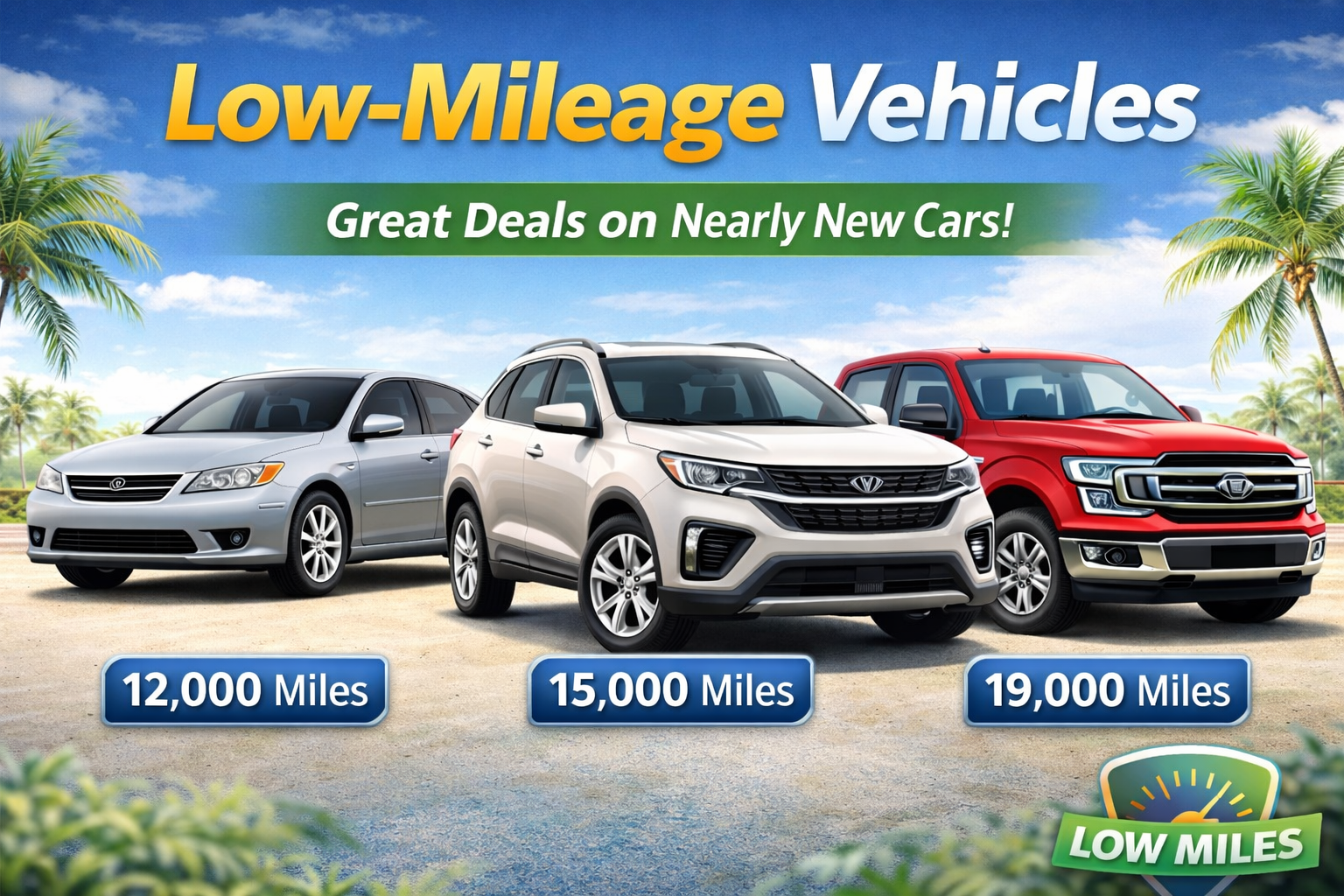
When shopping for used cars, one of the first numbers buyers look at is the odometer reading. Low mileage often creates an immediate sense of confidence — fewer miles on the odometer can suggest less wear and tear, better reliability, and a stronger resale value. But does low mileage always guarantee better performance and value?
In today’s automotive market, where buyers want reliability, affordability, and long-term value, understanding how mileage affects used car performance and value is more important than ever. Whether you’re purchasing a used car for daily commuting or considering selling a used vehicle for a trade-in, knowing how mileage impacts performance and value will help you make informed decisions when buying.
Does Low Mileage Always Mean Higher Resale Value and Better Reliability?
When it comes to used cars, mileage matters — but it’s not the only factor. A low-mileage vehicle typically experiences less wear and tear on major components such as the engine and transmission. Fewer miles often mean reduced stress on suspension parts, brakes, and internal engine components.
Because of this, low-mileage vehicles often:
- Hold their value better
- Command a higher resale value
- Offer more peace of mind to buyers
- Require fewer immediate repairs
However, mileage alone doesn’t guarantee reliability. A low-mileage car without proper oil changes, regular maintenance, or documented service history may develop issues. A well-maintained car with slightly higher mileage can sometimes perform better than a neglected low-mileage vehicle.
Understanding how mileage affects used car reliability means balancing odometer readings with maintenance records.
How Much Does Mileage Affect Resale Value Compared to Maintenance History?
Mileage is one of the biggest factors affecting the value of used cars, but maintenance history can be just as important. When buyers are shopping for a used car, they don’t just want fewer miles — they want proof the vehicle was cared for.
For example:
- A vehicle with 40,000 miles and no service records may raise red flags.
- A vehicle with 75,000 miles and detailed maintenance records may inspire confidence.
When mileage impacts resale value, it does so alongside:
- Documented oil changes
- Transmission service history
- Belt replacements
- Regular inspections
A strong maintenance history helps offset slightly higher mileage and may even increase the vehicle’s resale value. Buyers today understand that mileage affects key performance factors, but so does consistent care.
Can a High-Mileage Car Still Be a Reliable Option?
Absolutely. A high-mileage car can still be a great purchase — especially if it’s a well-maintained car with complete service records.
Many modern vehicles are built for long life. It’s common to see cars with 150,000 miles or more that continue to perform well with proper maintenance. A high-mileage vehicle with documented oil changes, transmission servicing, and brake replacements may still offer dependable performance.
However, cars with higher mileage may require:
- Suspension repairs
- Engine component replacements
- Higher repair costs over time
The key is evaluating whether the purchase price reflects the mileage and potential upcoming maintenance. In some cases, a high-mileage vehicle may be worth considering if it fits your needs and budget.
What Role Does the Odometer Play When Purchasing a Used Car?
The number of miles on the odometer is often the first detail buyers check. It provides context about expected wear and tear.
Generally speaking:
- Lower mileage = fewer miles per year
- Higher mileage = increased long-term use
The average vehicle accumulates about 10,000–15,000 miles per year. When purchasing a used car, comparing miles per year helps determine if the vehicle has good mileage for its age.
Still, mileage alone doesn’t paint the full picture. Buyers should:
- Inspect service records
- Confirm maintenance history
- Look for signs of odometer discrepancies
- Obtain a vehicle history report
Mileage tells part of the story — maintenance tells the rest.
How Does Mileage Impact Engine and Transmission Performance?
The engine and transmission are among the most expensive components in any used vehicle. As mileage increases, wear and tear on these systems becomes more likely.
Higher mileage can lead to:
- Timing belt replacements
- Transmission repairs
- Engine seal failures
- Fluid leaks
Routine oil changes and regular maintenance significantly reduce these risks. A low-mileage car generally experiences less internal stress, which may help it perform better over time.
However, low mileage does not eliminate age-related problems. Rubber seals, belts, and fluids degrade with time, even if the car has fewer miles. Always review maintenance records to understand how mileage affects long-term reliability.
Are There Important Mileage Milestones to Watch?
Yes — certain mileage expectations signal upcoming service needs. These milestones can influence the used car’s price and resale value.
Common maintenance milestones include:
- 60,000–100,000 miles: Timing belt replacements
- 30,000–60,000 miles: Transmission fluid service
- 100,000+ miles: Suspension component inspections
When buying or selling a used vehicle, consider whether major services are due. A vehicle approaching a major milestone may require negotiation on price. Conversely, a higher-mileage car that recently completed big-ticket services may hold its value better.
Knowing how mileage impacts depreciation and repair costs helps buyers make smarter decisions.
Does Low Mileage Reduce Repair Costs?
In most cases, yes. A low-mileage used car is less likely to need immediate repair compared to a higher-mileage car.
Fewer miles often mean:
- Less wear on brake components
- Lower stress on the engine
- Reduced transmission strain
- Better fuel efficiency
This can provide valuable peace of mind for buyers.
Still, a low-mileage car that sat unused for long periods may develop issues such as dry seals or degraded fluids. That’s why carefully inspect every used car, regardless of mileage.
How Does Mileage Affect Depreciation and Long-Term Value?
Depreciation plays a major role in determining a vehicle’s value.. Lower mileage cars typically experience slower depreciation and often achieve a higher resale value at trade-in.
Why? Because fewer miles signal a longer remaining lifespan.
Vehicles that often hold their value better include:
- Reliable sedans
- Popular SUVs
- Models known for long-term reliability
However, other important factors to consider include:
- Brand reputation
- Car’s condition
- Service history
- Market demand
Mileage plays a major role, but it works alongside these other elements.
Should You Pay a Premium for Low-Mileage Used Cars?
Paying more for a low-mileage vehicle can make sense — but only if the price aligns with expected maintenance savings and resale value.
Ask yourself:
- Does the vehicle have strong maintenance records?
- Is the used car’s price competitive?
- Are upcoming repairs likely?
- How long are you planning to own the vehicle?
Sometimes, a slightly higher-mileage car with a strong maintenance history may be the better value. Review your options thoroughly before making a decision
How Should You Inspect a Low-Mileage vs. High-Mileage Car?
Inspection strategies differ slightly based on mileage.
For low-mileage cars:
- Check for long periods of inactivity
- Inspect rubber seals and belts
- Verify oil changes and service history
For high-mileage cars:
- Examine suspension wear
- Check engine compression
- Review transmission service records
- Evaluate repair history
In both cases, obtaining service records and having an independent mechanic inspect the vehicle helps you understand how mileage impacts reliability and value.
How Do Market Demand and Vehicle Type Influence Mileage Impacts?
Market demand significantly affects how mileage impacts resale value. For example, SUVs often maintain stronger resale value, especially with lower mileage.
Certain vehicles are known for longevity, allowing them to command higher resale value even with higher mileage. Others may depreciate faster due to repair costs or luxury components.
When shopping for a used car, compare:
- Similar models
- Mileage ranges
- Local market prices
- Trade-in values
This ensures the mileage vehicle you choose offers fair value.
FAQ: Understanding Mileage, Reliability, and Resale Value
1. Does low mileage guarantee reliability?
No. While low mileage reduces wear and tear, maintenance history and service records are equally important.
2. What is considered good mileage for a used car?
Good mileage depends on age. Around 10,000–15,000 miles per year is typical. Lower mileage per year often indicates good mileage.
3. Can a high-mileage car still hold value?
Yes. A well-maintained high-mileage vehicle with strong service history can still achieve respectable resale value.
4. How does mileage affect trade-in value?
Lower mileage typically results in a higher trade-in offer because it reduces perceived future repair risks.
5. Should I prioritize mileage over condition?
No. The car’s condition, maintenance records, and service history are just as important as the miles on the odometer.
Key Takeaways: How Mileage Impacts Used Car Reliability and Resale Value
- Low mileage often correlates with higher resale value and fewer immediate repairs.
- Mileage alone does not determine reliability — maintenance history matters.
- High-mileage cars can still be a great value if well-maintained.
- Always inspect service records and review maintenance milestones.
- Knowing how mileage impacts a used car’s performance can help you make a smarter purchase decision.
- Depreciation, market demand, and vehicle type also affect a car’s value.
Whether you’re buying or selling a used car, knowing how mileage affects used car reliability and resale value is key to protecting your investment. If you’re searching for an affordable used car in Moncks Corner, SC, consider visiting Preferred Auto Wholesale. As a reliable used car dealership providing quality pre-owned vehicles with clear service and maintenance records, they help you evaluate your options and choose a car that suits your needs and budget with confidence.
How to Get a Car Loan Without Credit: Practical Steps to Finance a Car
Securing a car loan with no credit can feel overwhelming, especially if you’ve never taken out a loan or built a credit history before. Lenders rely heavily on credit histories and credit scores to assess risk, so borrowers with little or no credit face extra scrutiny. However, financing a car without credit is possible with the right preparation and strategy. This guide provides practical steps to help you get a car loan without credit, understand no-credit car loan options, and build your credit along the way—ensuring you drive home in an affordable used car while setting the foundation for stronger credit in the future.
Whether you’re exploring used car financing options or looking to finance a car without credit, this article breaks down actionable tips, documentation requirements, and strategies to increase your chances of approval.
Can I Get a Car Loan Without Credit or With No Credit History?
Yes, it’s possible for borrowers with no credit to get an auto loan, though the process and terms may differ from traditional financing. Dealerships, banks, and credit unions offer financing programs designed specifically for individuals with little or no credit history. These programs often emphasize income stability, down payments, and proof of responsible financial behavior over past credit.
Expect higher interest rates initially and consider applying for smaller loan amounts to improve your chances of getting approved. Lenders want assurance that you can manage monthly payments responsibly. Providing a complete application with documentation of steady employment, residence, and bank statements can significantly enhance your prospects of securing a car loan with no credit.
What Documentation Will Strengthen My Loan Application?
When applying for a car loan with no credit, thorough documentation is essential. Please bring:
- Valid identification (driver’s license or passport)
- Proof of residence (utility bills or lease agreements)
- Proof of income (pay stubs, tax returns, or bank statements)
If you have any credit accounts, such as a secured credit card or a small installment loan, show on-time payments. This demonstrates financial responsibility, even if your credit profile is minimal.
Some lenders may request additional verification, such as references or a detailed budget outlining your ability to make monthly payments. These documents help bridge the gap for borrowers with no credit history and increase the likelihood of loan approval.
How Can I Build Credit Before Applying for a Car Loan?
Building credit before applying is one of the most effective ways to secure better loan terms. Consider the following strategies:
- Open a secured credit card and make consistent payments.
- Become an authorized user on someone else’s credit card.
- Take out a small credit-builder loan and repay on time.
Even a few months of on-time payments can positively affect your credit report, helping you transition from a no-credit car loan to qualifying for lower interest rates and better financing options.
Lenders prioritize payment history and established credit, so taking steps to build your credit beforehand can improve your overall loan terms and increase your chances of getting approved.
How Long Should I Build Credit Before Applying?
While there’s no strict timeline, having at least six months of on-time payments is a good starting point. A year or more of managed credit—through a secured card or small loan—can make a significant difference in your credit score and lender perception.
Key tips to strengthen credit include:
- Keep balances low on revolving accounts.
- Avoid opening multiple accounts in a short period.
- Focus on consistent, responsible payments.
A stronger credit profile improves the likelihood of obtaining a car loan without credit at favorable terms.
Will Making a Larger Down Payment Improve My Chances?
Absolutely. A larger down payment reduces the loan amount and demonstrates to lenders that you are financially committed. For borrowers with no credit, this strategy can secure:
- Lower interest rates
- Reduced monthly payments
- Better loan terms
Even a 10–20% down payment can influence approval decisions. Consider trade-ins, savings, or assistance from family to increase your initial payment. A larger down payment also helps minimize negative equity and can make financing an affordable used car more manageable.
Should I Get a Cosigner to Boost Approval Chances?
A cosigner with an established credit history can significantly improve your chances of getting approved. Lenders view a cosigner as an additional guarantee that the loan will be repaid, which can lead to:
- Better interest rates
- Favorable loan terms
- Increased likelihood of approval
Ensure the cosigner understands their responsibility, as missed payments will impact their credit. Once your credit improves, you may be able to refinance the loan in your own name to secure even better terms.
Which Financing Programs or Dealerships Work Best for No-Credit Borrowers?
Many dealerships offer special financing programs for individuals with little or no credit, such as buy-here-pay-here options. Credit unions are often more flexible than traditional banks, focusing on income and stability over credit history.
When comparing offers:
- Check loan terms, interest rates, and fees.
- Ask about no-credit car loan programs.
- Use prequalification tools to evaluate potential approvals.
Shopping multiple lenders and comparing offers helps ensure you secure the best loan terms possible, even without a credit history.
How Do Credit Unions Compare to Banks for No-Credit Borrowers?
Credit unions often prioritize member-focused lending and may offer:
- Lower interest rates
- More forgiving loan terms
- Flexible criteria for borrowers with little or no credit
Banks may require stricter credit thresholds, but can still be competitive if other financial indicators are strong. Joining a credit union can provide access to financing programs that help you build credit while buying a car.
Why Should I Check My Credit Report Before Applying?
Reviewing your credit report is crucial before applying for a car loan without credit. Benefits include:
- Identifying errors that could be corrected
- Understanding what lenders will see
- Planning strategies to improve approval chances
Use soft pulls or prequalification tools when possible to avoid lowering your credit score. Correcting inaccuracies and ensuring all accounts are reported properly can enhance your chances of getting approved.
Can I Finance a Used Car Without Credit and Get Reasonable Loan Terms?
Yes. With careful planning, you can finance a used car without credit and secure reasonable terms. Key strategies include:
- Targeting an affordable used car to minimize loan amounts
- Making a larger down payment
- Considering a cosigner
- Comparing multiple lenders, including credit unions and dealerships with no-credit programs
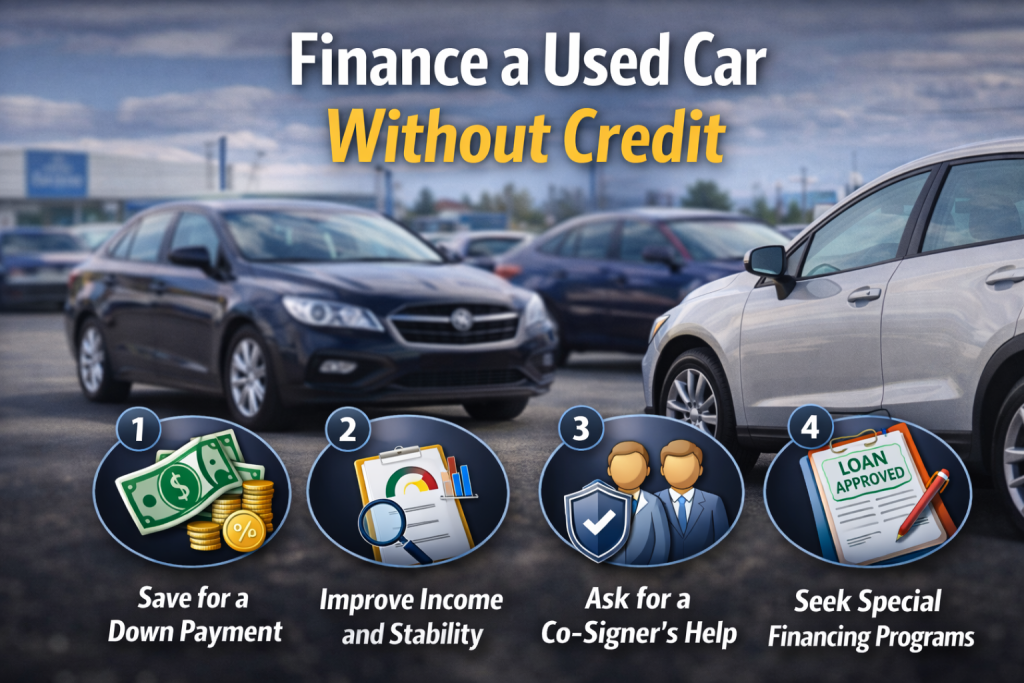
Responsible borrowing and on-time payments will help you build credit, qualify for lower rates, and eventually access better financing in the future.
How does my payment history or making on-time payments help my future loan prospects?
Payment history is the single most important factor in credit scoring models. Making consistent, on-time payments on any credit accounts or your current auto loan helps you build a stronger credit score and better credit history. Over time, this increases your chances of securing larger loans, better interest rates, and favorable loan terms.
If you start with a loan without established credit, prioritize making every payment on time. Use automatic payments or calendar reminders to avoid missed due dates. Even small, regular payments reported to the credit bureaus will help you move from a no-credit car loan situation to financing with good credit.
How long before my on-time payments impact my credit score?
You can begin to see positive effects on your credit within a few months, but meaningful improvement typically takes 6–12 months of consistent on-time payments. Each on-time payment contributes to your payment history and gradually builds established credit, improving the chances of getting approved for better auto loan offers in the future.
Keep balances low on any revolving accounts and avoid missing due dates. As your credit profile grows stronger, you’ll qualify for lower interest rates and better loan terms when you refinance or apply for future loans.
What are the practical steps to secure a car loan in Moncks Corner, SC, with no credit?
Start by checking local options: credit unions, community banks, and dealerships in Moncks Corner, SC often have tailored programs for borrowers with no credit. Gather income documentation, target an affordable used car, and consider making a larger down payment. Ask about no-credit car loan programs and prequalification to compare offers without multiple hard inquiries.
Work with lenders who understand your situation and can help you build credit while you finance a car. A cosigner or secured credit card can bridge the gap until your own credit is established. Focus on affordability and consistent payments to build your credit profile quickly and improve your chances of securing better loan terms later.
Where can I find specialized no-credit financing in my area?
Contact local dealerships and credit unions to inquire about financing programs for borrowers with no credit history. Many used car dealers and community credit unions offer solutions designed to help individuals get approved for a car loan without an extensive credit profile. Use online prequalification tools to narrow down options before visiting lenders.
Ask for referrals and read reviews. Local lenders who specialize in used car financing frequently work with first-time borrowers and can guide you through building credit and improving your chances of approval.
Key Takeaways: Car Loan With No Credit
- No-credit car loan options exist; preparation and strategy improve approval chances.
- Building even a small credit history increases access to better loan terms.
- Making a larger down payment or using a cosigner can secure lower interest rates.
- Shop credit unions, banks, and dealerships with no-credit programs
- Prioritize affordable used cars and consistent monthly payments to build credit.
When you’re ready to finance a used car with no credit, local dealerships can help guide you through the process. Preferred Auto Wholesale, a trusted used car dealer in Moncks Corner, SC, offers a variety of high-quality used cars and used car financing options. They can help you explore programs to get a car loan without credit and provide guidance to build your credit while driving away in an affordable used car. Whether you’re starting with little or no credit, Preferred Auto Wholesale makes it easier to secure financing and begin building a positive credit history while enjoying your new vehicle.
Best Used Commercial Vehicles: Cost-Effective Options for Small Businesses
In today’s fast-paced economy, small businesses in 2025 are continually seeking effective ways to operate efficiently without straining their budgets. One of the most significant investments many business owners face is purchasing a commercial vehicle—whether it’s a van, pickup, or commercial truck for your business. Selecting the best used commercial models can significantly impact profitability and daily productivity.
For small business owners, used work vans and commercial trucks provide a cost-effective solution with lower upfront costs, proven reliability, and versatile cargo capabilities. This guide explores the best used commercial vehicles available today, helping you find the right vehicle for your business—one that meets your operational needs, minimizes fuel costs, and delivers lasting value.

What Makes the Best Used Commercial Van for a Small Business?
Selecting the best used commercial vehicle begins with understanding what your business needs most. Factors like fuel efficiency, payload capacity, and towing capability play a crucial role.
For example, the Ford Transit remains one of the best work vans for its balance of power and practicality. Its variety of engine options and configurations—from cargo vans to passenger models—make it suitable for a range of small business uses. The Ram 1500 and Chevrolet Silverado 1500 are equally popular used commercial truck choices, offering both comfort and heavy-duty performance.
Key factors to evaluate before buying:
- Cargo capacity and interior space for tools or deliveries
- Fuel economy and long-term cost of ownership
- Maintenance history and vehicle condition
- Resale value and long-term dependability
How Do Commercial Vans Support Small Business Operations?
Commercial vans are the backbone of many small businesses, especially those in logistics, delivery, and trade services. Vehicles like the Ford Transit, Ford Transit Connect, and Ram ProMaster offer plenty of cargo space and strong fuel economy, allowing business owners to carry large loads efficiently while keeping costs manageable.
For example, Ford Transit Connect models provide manoeuvrability and versatility, perfect for urban routes or businesses with tight delivery schedules. Meanwhile, the Mercedes-Benz Sprinter offers best-in-class cargo capacity, appealing to businesses that need extra space or specialized upfitting for their fleet.
By purchasing used work vans, small business owners can gain all the benefits of reliability and functionality at a fraction of the cost of new models.
Why Should You Consider Buying Used Commercial Vehicles Instead of New?
Buying used rather than new is one of the smartest moves a business owner can make in 2025. New commercial trucks and vans depreciate rapidly—often losing up to 30% of their value in the first year alone. A used commercial vehicle, on the other hand, offers a lower upfront cost and more predictable resale value.
Other benefits of buying used include:
- Lower cost of ownership over time
- Access to proven models with established reliability records
- Greater flexibility for fleet vehicles or seasonal needs
- Availability of vehicle history reports and maintenance records.
For small businesses, these advantages translate into better cost savings, higher returns, and the freedom to invest in other critical areas like marketing, staff, or equipment.
Which Commercial Vans Are the Most Reliable Choices in 2025?
Reliability is essential when you depend on your van or commercial truck for daily operations. Among the most trusted options are the Ford Transit, Mercedes-Benz Sprinter, and Chevrolet Express.
- Ford Transit: Known for its proven durability and fuel efficiency, it offers several engine options and configurations for cargo or passenger use.
- Mercedes-Benz Sprinter: Offers maximum cargo capacity and diesel engine efficiency, perfect for delivery and logistics businesses.
- Chevrolet Express: A time-tested work van valued for its payload capabilities and simple maintenance schedule.
Each of these used commercial vehicles balances performance, comfort, and longevity, giving small business owners peace of mind knowing they can count on their fleet every day.

What Role Do Pickup Trucks Play in Meeting Small Business Needs?
Not every business needs a van—some rely on pickup trucks like the Ram 1500, Chevrolet Silverado 1500, or Ford F-150 for heavy hauling and towing tasks. These models combine payload and towing capacity with comfort and reliability, making them a great vehicle for your business if you’re in construction, landscaping, or maintenance.
The Ram 1500 stands out for its smooth ride, strong towing performance, and high resale value. The Chevrolet Silverado 1500 is ideal for those seeking fuel efficiency without compromising power. These pickups provide business owners with flexibility for transporting both equipment and employees while keeping operations efficient.
How Does Fuel Efficiency Affect the Cost of Ownership?
Rising fuel prices have made fuel economy a top priority for small businesses in 2025. Choosing used commercial vehicles with strong fuel efficiency directly impacts your cost of ownership and bottom line.
Compact work vans like the Ford Transit Connect and Ram ProMaster City deliver impressive mileage—often surpassing 25 MPG—making them an affordable commercial vehicle choice for urban deliveries. Meanwhile, the Ford Transit Diesel and Mercedes-Benz Sprinter BlueTEC models offer excellent long-range efficiency.
Pro Tip: Regular maintenance, such as timely oil changes and tire checks, can further improve your fuel economy and extend your vehicle’s life.
What Should You Look for When Buying Used Commercial Trucks or Vans?
Before you buy used, do your due diligence. Examine every used model carefully to ensure you’re getting a reliable work vehicle with no hidden issues.
Here’s what to check:
- Maintenance history – Ask for a complete record of service visits, oil changes, and repairs.
- Mileage – Lower mileage usually means less wear, but condition matters more than numbers.
- Inspection results – Have a trusted mechanic inspect the engine, transmission, and brakes.
- Ownership background – Avoid vehicles with unclear histories or frequent ownership changes.
A well-maintained used commercial truck can serve your small business reliably for years. Always verify the gross vehicle weight rating (GVWR) and ensure it matches your specific business needs.
Which Used Work Vans Offer the Best Cargo and Maneuverability?
When businesses need spacious yet easy-to-drive vehicles, the best work vans stand out. The Ram ProMaster, Ford Transit, and Mercedes-Benz Sprinter are three of the most capable models, each offering plenty of cargo space and versatile payload options.
- Ram ProMaster: Offers best-in-class cargo capacity and a low load floor, making it easy to load and unload tools or packages.
- Ford Transit: A top choice for businesses that need configurable space, multiple roof heights, and various transmission options.
- Mercedes-Benz Sprinter: Ideal for companies requiring maximum cargo capacity and a professional look.
These commercial vans deliver strong manoeuvrability, allowing drivers to navigate tight city streets or warehouse lots effortlessly—key advantages for businesses that need reliable deliveries.
How Does Towing Capacity Influence Your Commercial Vehicle Choice?
If your business involves hauling heavy tools, trailers, or materials, towing capacity is crucial. The Ram 1500, Chevrolet Silverado 1500, and Ford F-250 lead the way with their high payload and towing capabilities.
For instance:
- The Ram 1500 can tow up to 12,750 pounds with the right configuration.
- The Chevrolet Silverado 1500 provides a strong combination of towing power and fuel economy, ideal for local contractors.
- The Ford F-250 Super Duty, though larger, is a dependable option for industries that need maximum strength.
Matching the towing capacity to your business needs ensures safety, efficiency, and long-term reliability in daily operations.
What Financing Options Help Small Businesses Purchase Used Commercial Vehicles?
Financing plays a big role in how small businesses acquire their vehicles. Many dealerships offer financing options tailored specifically to buying used commercial vehicles. These plans often feature flexible terms, low interest rates, and approvals based on business credit rather than personal credit.
Some business owners explore partnerships with Credit Unions for better interest rates or fleet financing programs for multiple used work vans or trucks. Leasing pre-owned models can also reduce upfront cost while maintaining manageable monthly payments.
Before signing, compare:
- Interest rates and total loan amounts
- Down payment requirements
- Vehicle age and mileage limits for financing eligibility
Choosing the right plan helps ensure your commercial truck for your business fits within your budget while supporting long-term growth and cost savings.
How Do Maintenance and Resale Value Impact Long-Term Investment?
Smart business owners know that maintenance schedules and resale value directly affect long-term costs. Vehicles with consistent service records—such as regular oil changes, tire rotations, and brake checks—typically last longer and maintain higher resale value.
Brands like Ford, Chevrolet, and Ram are well-known for producing reliable work vehicles with lower maintenance costs and easy-to-find replacement parts. Keeping detailed maintenance logs not only provides peace of mind but also boosts confidence when it’s time to sell or trade your vehicle.
Pro Tip: Follow manufacturer recommendations and keep every service receipt. This small step can add hundreds or even thousands to your used vehicle’s resale price.
How Can You Find the Right Vehicle for Your Specific Business Needs?
Every business has unique requirements. To find the right vehicle, start by identifying how your vehicle will be used daily. Will you transport goods, tools, or passengers? Do you need towing power or maximum cargo capacity?
Consider:
- Contractors and tradespeople: benefit from pickup trucks like the Ram 1500 or Chevrolet Silverado 1500.
- Delivery companies: rely on vans such as the Ford Transit or Mercedes-Benz Sprinter.
- Catering or floral businesses: They need compact models like the Ford Transit Connect for easy parking and fuel efficiency.
By aligning your selection with your specific business needs, you’ll ensure your vehicle supports operations rather than becoming a costly burden.
What Are the Top Cost-Effective Used Commercial Vehicles for Small Businesses in 2025?
Based on market performance, here are some of the best used commercial options for small businesses in 2025:
- Ford Transit: Highly versatile, customizable, and efficient.
- Ram ProMaster: Spacious interior with excellent handling for city routes.
- Mercedes-Benz Sprinter: Premium cargo space and comfort.
- Chevrolet Express: Rugged and dependable, ideal for tradespeople.
- Ram 1500: Strong towing, high resale value, and all-around capability.
- Chevrolet Silverado 1500: Durable, fuel-efficient, and reliable performance.
Each of these models offers cost savings, proven reliability, and long-term value for businesses seeking used commercial vehicles that deliver consistent performance.
Key Takeaways: Choosing the Right Used Commercial Vehicle
- Focus on reliability, fuel efficiency, and cargo capacity.
- Consider the maintenance history and resale value before purchasing.
- Compare pickup trucks and work vans to determine which one best suits your specific business needs.
- Evaluate towing capacity, payload, and manoeuvrability for your tasks.
- Leverage financing options to reduce upfront costs.
- Keep a regular maintenance schedule for long-term peace of mind.
- Choose brands like Ford, Ram, Chevrolet, and Mercedes-Benz for proven reliability.
Final Thoughts: Where to Find Affordable Used Commercial Vehicles
Finding the perfect used commercial vehicle doesn’t have to be complicated. By understanding your business needs, setting a clear budget, and choosing from trusted brands, you can secure a reliable van or truck that drives your business success.
For those seeking affordable commercial vehicles and dependable service, Preferred Auto Wholesale in Moncks Corner, SC, offers a wide selection of used commercial vehicles tailored to meet the needs of every small business. Whether you need used work vans, pickup trucks, or commercial trucks, their team is dedicated to helping you find the right fit.
If you’re searching for used commercial vehicles in Moncks Corner, SC, make Preferred Auto Wholesale your trusted destination—where quality, value, and customer satisfaction come standard.
Top Reasons to Buy Certified Pre-Owned Vehicles Instead of New Cars
Buying a car is one of the most important financial decisions many people will ever make. Whether you’re a first-time buyer or upgrading your current vehicle, the choice often comes down to whether to buy a new car or a pre-owned vehicle. While new cars come with that enticing “fresh off the lot” appeal, buying a used car offers practical, long-term benefits that make it a smarter choice for many buyers. From cost savings to lower depreciation and added value, there are countless advantages of buying pre-owned vehicles instead of new ones.
In this guide, we’ll dive deep into the reasons why more and more car buyers are turning to used cars and certified pre-owned vehicles—and how making the switch can save you money, provide peace of mind, and still give you the features you want.
What Are the Financial Advantages of Buying Used Cars?
One of the biggest reasons to buy a used car instead of a new vehicle comes down to affordability. New cars often come with hefty price tags, while used cars—even those just a couple of years old—can cost thousands less.
- According to Kelley Blue Book, the average price of a new car now exceeds $40,000.
- A comparable pre-owned vehicle may cost $15,000–$20,000 less, depending on mileage, trim, and condition.
That difference doesn’t just save you money upfront; it also reduces car payments, interest on your auto loan, and taxes. Simply put, used cars offer more value for your money.
Another financial advantage is reduced depreciation. While a new vehicle can lose up to 20% of its value in the first year alone, used cars have already gone through that initial depreciation drop. This means you’ll get a better return on your investment if you decide to resell later.
How Does Buying a Certified Pre-Owned Vehicle Benefit You?
If you like the idea of reliability but want to save compared to buying new, Certified Pre-Owned (CPO) vehicles are the perfect middle ground. These cars are typically late-model, low-mileage vehicles that go through rigorous inspections before being resold.
Benefits of buying a CPO car:
- Comes with extended warranties similar to new cars.
- Includes perks like roadside assistance and free maintenance.
- Backed by a detailed vehicle history report.
For buyers who want peace of mind without the “new car” price, buying a certified pre-owned vehicle is one of the best choices available.
What Safety Features Can You Expect in Pre-Owned Vehicles?
One common misconception is that used vehicles lack modern safety features. In reality, many pre-owned cars from recent model years include the same advanced technologies found in new cars.
- Advanced driver assistance systems (ADAS) like lane departure warning and blind-spot monitoring.
- Adaptive cruise control for stress-free highway driving.
- Automatic emergency braking is now common in certified pre-owned cars.
- Features like Apple CarPlay and Android Auto infotainment systems.
This means you don’t have to buy a brand-new car to get the latest safety and convenience technology—buying used often gives you the same features at a fraction of the cost.
How Does Depreciation Affect Your Vehicle Purchase?
Depreciation is a critical factor that affects the overall cost of car ownership. New cars can lose up to 20% of their value within the first year alone. By choosing to buy a used car, you can save thousands of dollars that you would have otherwise lost to depreciation.
For instance, if you purchase a car that is two years old, you might save a significant amount compared to buying a new car. This money saved can be redirected towards other expenses, such as insurance or maintenance.
What Should You Know About the Used Car Market?
The used car market is massive, giving car buyers more options than ever before. Whether you want a compact commuter car, a family-friendly SUV, or a luxury sedan, there’s a pre-owned vehicle that fits your budget.
- Thousands of cars are available across dealerships and online platforms.
- Increased competition means better deals for buyers.
- Used car dealerships often offer financing, warranties, and vehicle history reports.
With so many options, the key is to shop smart, compare prices, and look for certified pre-owned cars when possible.
What Are the Benefits of Buying a Used Vehicle with Lower Insurance Costs?
Insurance premiums are based largely on the value of your vehicle. Since used cars cost less than new cars, insurance companies typically charge lower monthly premiums.
For example, insuring a $40,000 new SUV will cost significantly more than insuring a similar $20,000 used SUV. Over the life of the loan, this difference can save you thousands of dollars.
When you combine lower car payments and reduced insurance rates, the total cost of ownership for a used car is much lower than that of a new vehicle.
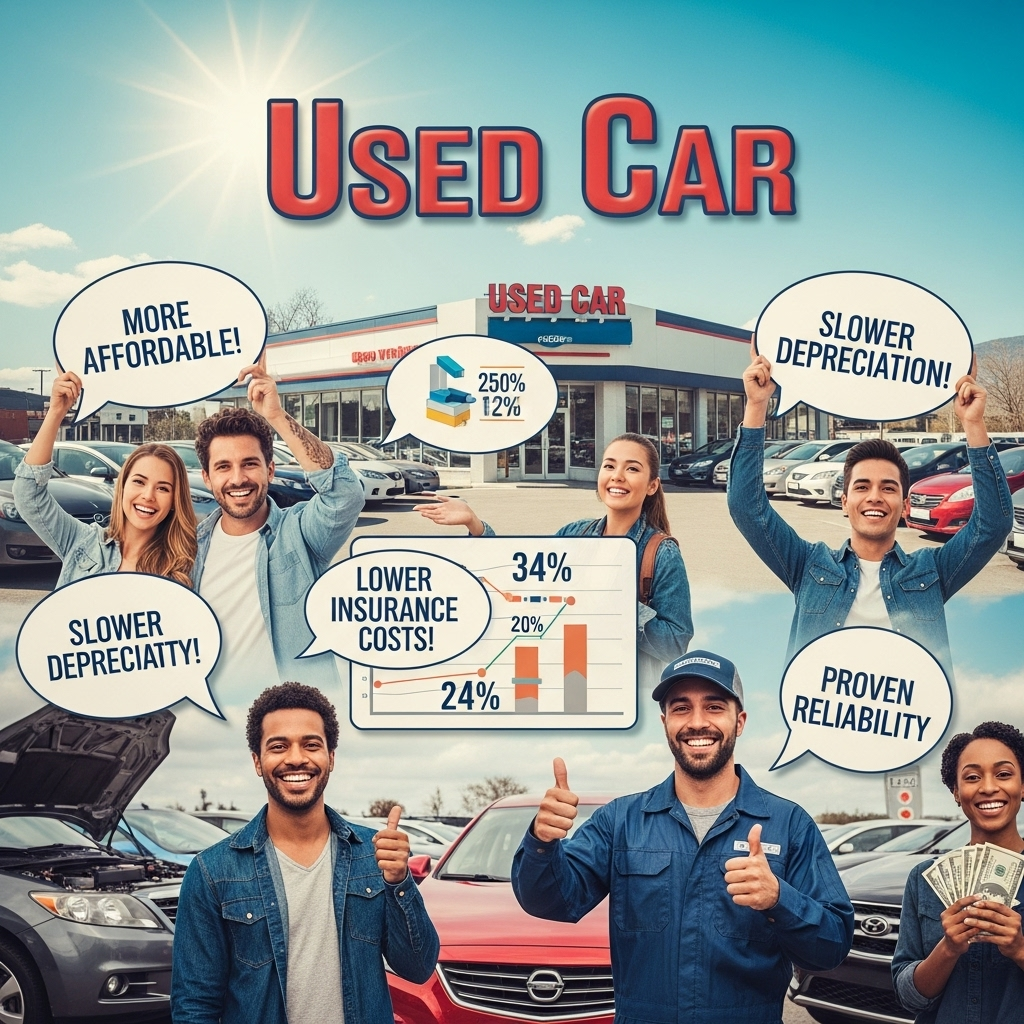
How Can You Ensure Quality When Buying Used?
Ensuring quality is crucial when shopping for a used car. Always request a vehicle history report to understand the car’s past, including any accidents or major repairs. A thorough inspection by a trusted mechanic is also recommended, especially if you’re considering buying a non-CPO used car.
Many dealerships offer certified pre-owned vehicles that have undergone rigorous inspections, ensuring that you are getting a reliable car. Look for warranties that cover necessary repairs to give you added peace of mind.
Should You Consider Mileage When Buying a Used Car?
Mileage is an important factor when deciding on a used vehicle. Generally, a car with lower mileage is perceived as being in better condition and may have a longer lifespan ahead. However, a higher-mileage car that has been well-maintained can still be a great option.
When shopping for a used car, consider the vehicle’s service history and how well it has been maintained, rather than focusing solely on mileage. A well-cared-for vehicle may outperform a lower-mileage car that has been neglected.
FAQs About Buying Certified Pre-Owned vs. New Cars
1. What is the difference between used and certified pre-owned cars?
A used car is sold as-is, while a certified pre-owned vehicle goes through a manufacturer-backed inspection, includes a warranty, and often comes with perks like roadside assistance.
2. Are certified pre-owned vehicles worth the extra cost?
Yes. While slightly more expensive than non-certified used cars, CPO vehicles provide added peace of mind, warranty coverage, and verified quality—making them a strong value for many buyers.
3. Do certified pre-owned cars have low mileage?
Most CPO programs require vehicles to be late-model and have relatively low mileage, ensuring they’re in excellent condition before resale.
4. Can I finance a certified pre-owned car?
Absolutely. Many dealerships and lenders offer financing options for certified pre-owned vehicles, often with competitive interest rates similar to new car financing.
5. Do pre-owned cars include modern technology features?
Yes. Many CPO and late-model used cars come equipped with advanced safety systems, infotainment features, and driver-assist technology, making them comparable to new models at a lower price.
Is Buying a Used Car a Better Overall Choice?
Ultimately, deciding whether to buy a new or used car depends on your personal circumstances and preferences. However, for many car buyers, purchasing a used vehicle offers substantial advantages, including lower purchase prices, reduced depreciation, and potential savings on insurance.
Given the variety of options available in the used car market, it’s often possible to find a pre-owned vehicle that meets your needs without compromising on quality or safety features.
- Pre-owned vehicles often offer significant savings compared to new cars.
- CPO vehicles provide peace of mind with warranties and thorough inspections.
- Buying used can result in lower insurance costs and reduced depreciation.
- The used car market offers a wide range of options to suit different needs.
- Quality assurance can be ensured through vehicle history reports and inspections.
In conclusion, if you’re considering buying pre-owned vehicles in Moncks Corner, SC, look no further than Preferred Auto Wholesale. They offer a wide selection of affordable pre-owned vehicles, perfect for those ready to make the switch from new. With a commitment to quality and customer satisfaction, you can confidently buy pre-owned vehicles knowing you’re making a wise investment.
Time to Trade In Your Car? Tips to Upgrade to a New Car
Upgrading your car is one of the biggest decisions many drivers face. Whether you’re ready to trade in a car, thinking about the right time to trade, or simply wondering how trading in a car works, knowing the process inside and out will save you money and stress. Understanding trade-in value, how to prepare your car, and whether it’s smarter to trade in your vehicle or sell privately can make all the difference when you’re upgrading your car.
In today’s competitive automotive market, trade-ins have become one of the most popular ways to move from your current vehicle into a newer car or SUV. But if you’ve ever asked yourself, Is it the right time to trade? Or how do I get the best trade-in value for my car?, This guide will walk you through everything you should know.
When is the Right Time to Trade in Your Car?
Knowing the right time to trade in your vehicle is important. Factors like mileage, the age of your car, and changes in your family’s needs play significant roles. If your current vehicle has high mileage or is starting to incur repair bills, it might be time to trade. Assess your vehicle’s condition and consider whether it still meets your family’s requirements.
Additionally, if the safety features of your current vehicle do not meet modern standards, upgrading to a newer car may be necessary. Newer vehicles often come equipped with advanced safety features that can better protect your family.

How to Prepare Your Car for Trade-In?
Many drivers struggle with knowing when it’s time to trade. A few key indicators can help you decide:
- High repair costs: If your old car is racking up repair bills, it might be time to upgrade.
- Warranties expired: When warranties end, out-of-pocket costs for maintenance increase.
- Mileage creeping up: A higher-mileage car often loses resale value quickly.
- Lifestyle changes: Expanding families may need an SUV, while empty nesters may want something smaller.
For example, if your sedan has 120,000 miles and your repair expenses are higher than your monthly payment on a newer vehicle, it’s probably time to trade in your car.
How Do You Prepare Your Car for a Trade-In?
Preparing your car is one of the simplest ways to increase trade-in value. “Just a few steps can have a big impact:
- Clean your car inside and out. A clean car makes a great first impression.
- Fix minor issues. Replace worn tires, top off fluids, and address a check engine light.
- Collect documents. Bring your title, maintenance history, VIN details, and sets of keys.
- Get rid of personal belongings. Dealerships appreciate a car that’s ready to resell.
When you prepare your car properly, dealerships see it as well-maintained, which often results in a higher trade-in offer.
How Does the Appraisal Process Work When You Trade In a Vehicle?
Dealerships use appraisals to assess the value of your trade-in. Typically, they look at:
- Vehicle condition – including scratches, dents, and interior wear.
- Mileage – vehicles with lower mileage typically have a higher trade-in value.
- Market value – demand for your make and model
- Vehicle history report – accidents or damage lowers resale value
Pro tip: Before visiting a dealership, use online appraisal tools to get a rough estimate. This will help you compare dealership offers and avoid accepting a lowball price.
How to Increase the Value of Your Trade-In?
Several tips and tricks can help increase your trade-in value. Start by taking care of any minor repairs before trading in your vehicle. Fixing issues like a check engine light or worn tires can positively impact your vehicle’s resale value.
Additionally, providing a detailed maintenance history can showcase how well you’ve cared for your vehicle, further increasing its perceived value. Remember, a well-maintained car is more appealing to dealerships and private buyers alike.
Should You Trade in a Financed Car?
Trading in a financed car can be a bit complicated, especially if you still owe money on your loan. However, it’s not impossible. If your trade-in is worth more than your outstanding loan, you can apply the positive equity toward your new car purchase.
On the other hand, if you owe more than your car’s trade-in value, you’ll need to account for this negative equity when planning your next purchase. Dealerships may roll this amount into your new loan, but it’s essential to understand how this affects your overall financial situation.
What to Expect from Your Trade-In Offer?
The value of your trade-in depends on factors like your car’s condition, mileage, and current market demand for its make and model. It’s vital to be realistic about your car’s value and to do your research beforehand.
Once you get an offer, feel free to negotiate. Dealerships expect some back-and-forth during the trade-in process, so be prepared to discuss your vehicle’s merits and any comparable sales you’ve researched.
Is It Better to Trade In Your Vehicle or Sell Privately?
Both options have pros and cons:
Trade-in advantages:
- Quick and easy process
- Use your trade-in value toward the purchase of your new vehicle.
- No need to advertise or meet strangers
Private selling challenges:
- Takes more time and effort
- You must handle paperwork, DMV transfers, and buyer negotiations
- Risk of scams or unreliable buyers
If you want convenience and speed, trading in at a dealership may be worth accepting a slightly lower trade-in value.
What Are Common Mistakes to Avoid When Trading In?
“For a seamless trade-in, it’s important to steer clear of common mistakes. One key error is failing to check your car’s market value ahead of time. Knowing the value of your trade-in allows you to negotiate better and avoid accepting a lower offer.
Another frequent error is neglecting to clean and prepare your car adequately. A good first impression counts, and a clean, well-kept car is more likely to earn a higher trade-in value.
How to Negotiate Your Trade-In Offer?
While negotiating your trade-in offer may seem intimidating, it’s a crucial step in the process. Begin by presenting any documentation that supports the condition and history of your vehicle. This can include maintenance records, any completed repairs, and an appraisal from a reputable source.
Feel free to make a counteroffer to the dealership’s first bid. Leverage your research to support your asking price and ensure you’re satisfied with the final trade-in value before closing the deal.
What Are the Key Tips and Tricks for Successful Trade-Ins?
- Conduct thorough research to understand the value of your trade-in.
- Clean and prepare your car before the appraisal.
- Consider whether it’s the right time to upgrade based on your vehicle’s condition.
- Weigh the pros and cons of private selling versus trading in a car at a dealership.
- Take your time to negotiate and avoid accepting the first offer right away.
Key Takeaways
- Check your car’s market value before heading to a dealership. Prepare your car by cleaning it and gathering all necessary paperwork.
- Understand the appraisal process and be realistic about your trade-in value.
- Consider the pros and cons of trading in versus selling privately.
- Negotiate confidently and don’t accept the first offer without discussion.
Upgrading to a new family vehicle can be a fulfilling experience, especially when you ensure you get the best trade-in value for your current car. If you’re ready to make that upgrade, consider visiting Preferred Auto Wholesale, a trusted used car dealer in Moncks Corner, SC. They can help you trade in your car for a high-quality family vehicle and guide you through the process of finding the best used cars in Moncks Corner, SC.